ResearchAnalysis
Salesforce, Meta and Microsoft cut 16,800 jobs and kept buying AI companies
We cross-referenced 65 AI-linked layoffs with 190 AI acquisitions and 832 AI job postings. Three companies cut and bought; five cut and are still hiring for AI roles.
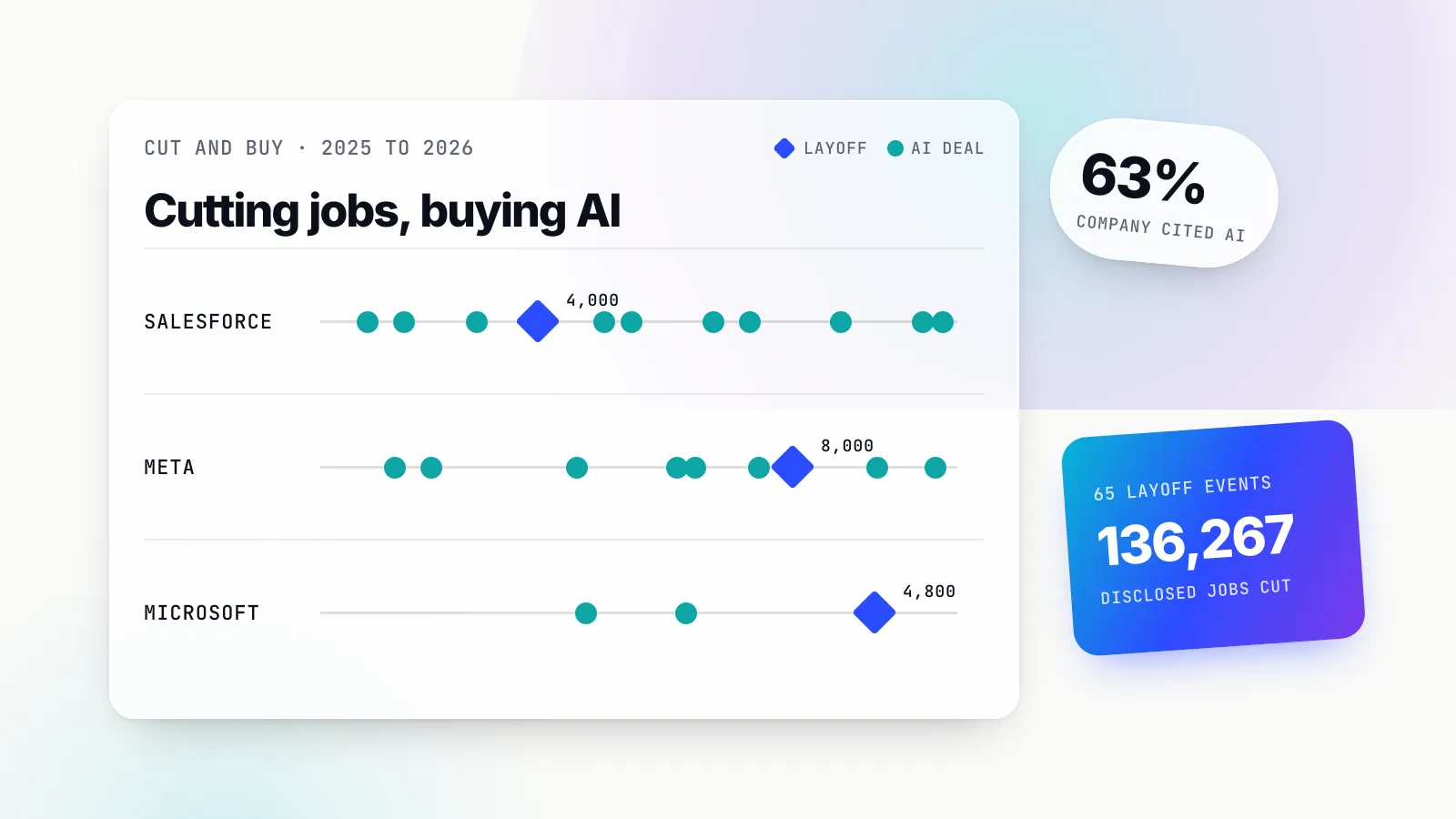
Three of the 62 companies in our AI layoffs tracker also appear in our AI acquisitions tracker, and between them they cut 16,800 jobs in AI-linked layoffs while announcing 21 AI deals that are still live. Salesforce, Meta and Microsoft are the only exact matches when the 65 layoff events since January 2025 are cross-referenced against 190 AI acquisitions and 832 AI engineering job postings, all from GenAI Brief’s own public datasets as of 29 October 2026.
The same cross-reference shows something more general about how these cuts are described. In 41 of 65 events (63%), the company itself tied the cut to AI. The remaining 24 rely on reporting, and three of the largest employers in the data, Amazon, Meta and Microsoft, account for two-thirds of the job cuts in that “Reported” group. Five companies that made AI-linked cuts were still advertising 45 AI engineering roles on the day we took the salary snapshot.
None of this shows that buying AI companies caused anyone to lose a job, or that a layoff funded a deal. It shows where the two activities sit side by side, in what order, and what each company said about it. This piece is for people who have to read layoff announcements carefully: hiring managers benchmarking against peers, engineers deciding where to work, founders whose acquirers are on these lists, and analysts who need to know what a tracker can and cannot carry.
Key findings
- Cutting and buying. Salesforce, Meta and Microsoft are the only companies in both the layoffs and acquisitions trackers. Together: 16,800 disclosed AI-linked job cuts and 22 AI deals (21 not terminated), 22 of the 190 deals in the acquisitions tracker (12%). Only one of the live deals has a stated price: Salesforce’s approximately $3.6 billion agreement for Fin.
- Who says “AI” out loud. Companies cited AI themselves in 63% of events, but Reported events carry 47% of disclosed headcount (64,535 of 136,267), and 66% of that comes from Amazon, Meta and Microsoft.
- Big shares, own words. Nine of the ten cuts of 20% or more of a workforce were ones where the company cited AI (9 of 23 vs 1 of 11 Reported). The pattern is consistent but the sample is small (Fisher p = 0.11), and the “smaller firms cut deeper” idea barely shows up (Spearman −0.17, n = 26).
- Cutting and hiring. Pinterest, Cloudflare, Coinbase, Chime and Block were listing 45 AI engineering postings on 29 October 2026, months after their cuts. Pinterest’s 22 postings carry a median midpoint of $298K, above the $260K snapshot median.
- Concentration. The five largest events hold 52.1% of disclosed job cuts. Software leads with 15 events and 34,570 jobs, and 39 of 65 events (60%) are at US companies.
Cutting and buying: the three companies in both trackers
We matched company names across the three datasets with an explicit normalisation step: lower-case, strip accents and punctuation, drop corporate suffixes such as “Inc” and “Group”, then require an exact match. The script prints the full map for all 62 layoff companies and every near-miss it rejected, so a reader can check that, for example, Snap is not SAP, Standard Chartered is not Standard AI and DOOR is not DoorDash. Parent and subsidiary pairs are not merged: Zoox posts AI roles on its own board and is not counted as Amazon.
| Company | AI-linked layoff | AI label | AI deals in tracker | Live deals | Stated price | Deals before / after the layoff |
|---|---|---|---|---|---|---|
| Salesforce | 4,000, Sep 2025 | Company cited AI | 10 | 10 | Fin, ~$3.6B | 3 / 7 |
| Meta | 8,000 (10%), 23 Apr 2026 | Reported | 10 | 9 | None (Manus, ~$2B reported, terminated) | 6 / 3 |
| Microsoft | 4,800 (2.1%), 6 Jul 2026 | Reported | 2 | 2 | None | 2 / 0 |
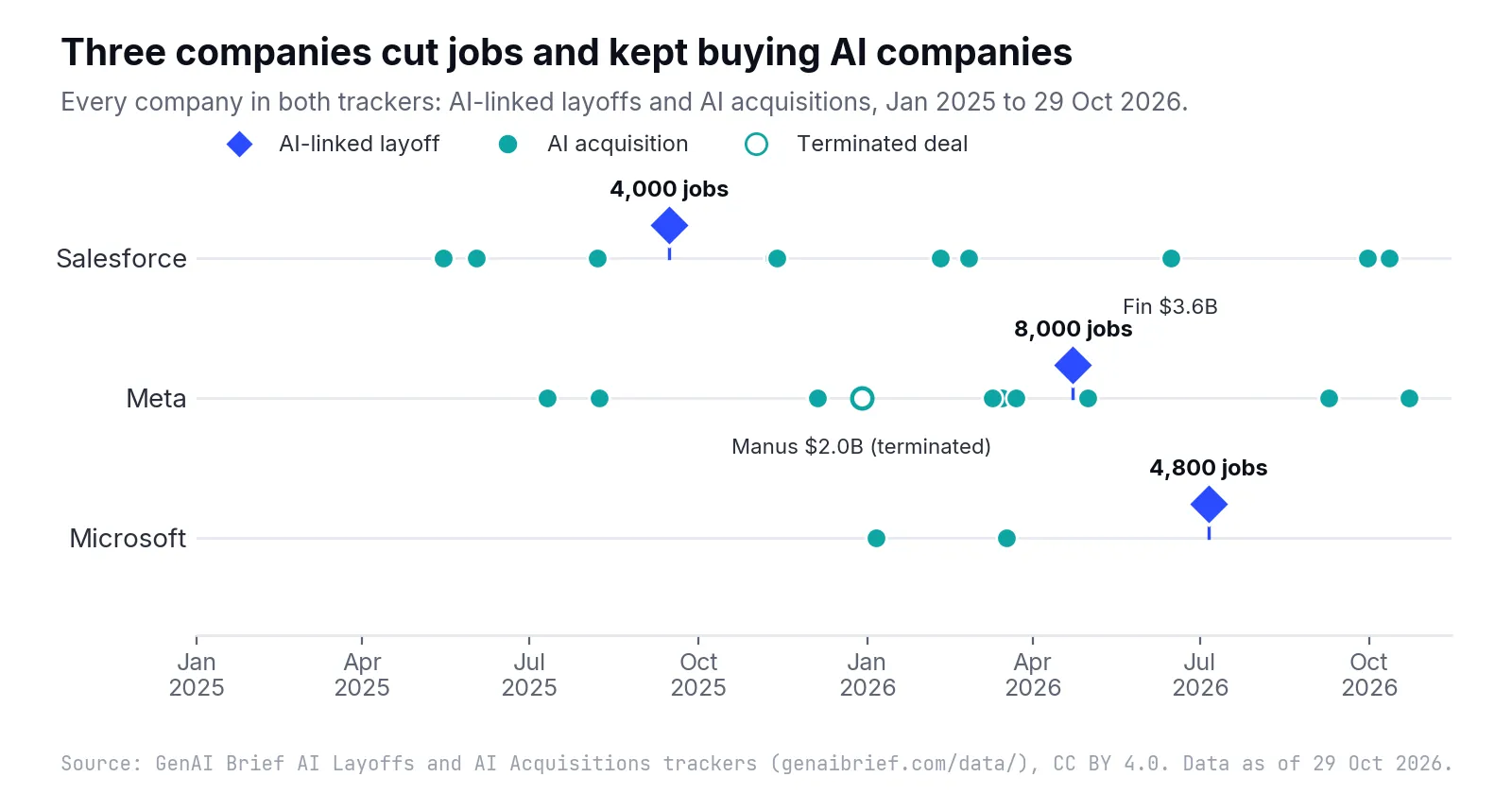
Chart 1: For all three companies, AI deal-making ran before and after the AI-linked cut. The sequence is visible; the motive is not.
Salesforce: the clearest case of both
Salesforce is the only one of the three where the company itself drew the AI link. The tracker records 4,000 cuts in September 2025, sourced to CNBC’s report that Salesforce had cut 4,000 customer support roles, in which chief executive Marc Benioff, speaking on a podcast about AI’s effect on the company, said: “I’ve reduced it from 9,000 heads to about 5,000, because I need less heads”. There is no stated share of workforce for this row, so it does not appear in the share analysis below.
On the acquisitions side, Salesforce is the second-most active buyer in the whole tracker with 10 deals, behind only OpenAI’s 12. Three came before the September 2025 cut (Convergence.ai, Moonhub and Waii) and seven after (Spindle AI, Doti, Cimulate, Momentum, Fin, Listen Labs and Loops). Nine of the ten have no disclosed price. The exception is Fin: Salesforce’s own announcement of 15 June 2026 says it “will acquire Fin for approximately $3.6 billion”, describing Fin, formerly Intercom, as a customer agent company whose AI agent resolves support queries across channels.
That is the detail a careful reader should hold onto. The cut Benioff described was in customer support, and the largest priced deal in the company’s AI shopping list is a customer-support agent company, bought nine months later. The data cannot tell you whether those decisions were connected in Salesforce’s planning, and we are not suggesting they were. It can tell you that a reader who looks only at the layoff tracker, or only at the deals tracker, sees half of what one company did in the same function over the same year.
Two of the later Salesforce rows carry notes worth reading before quoting a number. Listen Labs has no stated price; a figure of about $2 billion that circulated came from an earlier report of talks, not from the deal. Loops is also undisclosed, with an outside estimate of about $30 million noted but not used. Under the tracker’s rules, estimates and valuations are not prices.
Meta: the busiest buyer with a Reported cut
Meta matches Salesforce on deal count with 10, one of which, the reported ~$2 billion agreement for Manus, is marked terminated and excluded from totals. Six of the nine live deals came before its April 2026 cut of 8,000 people (10% of the workforce), and three after: Assured Robot Intelligence in May, Stilla in September and Sundial in October 2026. None has a stated price.
The layoff is labelled Reported. The tracker’s source, CNBC’s report of the memo to staff, says Meta plans to lay off about 8,000 employees “as it continues ramping up investments in artificial intelligence” and is scrapping plans to fill 6,000 open roles. That framing is CNBC’s; Meta did not attribute the cut to AI in its own words in the material we hold. Under the tracker’s methodology, that is exactly the line between the two labels. The distinction matters when the two activities appear together: a reader can say Meta cut 8,000 jobs and bought AI companies in the same period, but cannot say Meta cut jobs because of AI.
Meta’s deals are also a different mix from Salesforce’s. They span voice models (PlayAI, WaveForms), a wearable (Limitless), robotics (Assured Robot Intelligence), agents (Dreamer, Stilla) and analytics (Sundial), and include an acqui-hire (Atma Sciences, the team behind Gizmo) and a licensing-and-hire arrangement (Dreamer). Three deals landed within a fortnight in March 2026, which is why some dots overlap on the chart.
Microsoft: two deals, one Reported cut
Microsoft’s overlap is the thinnest. The acquisitions tracker holds two deals, Osmos in January 2026 and an acqui-hire of the Cove team in March 2026, both undisclosed, and both before the July 2026 cut of 4,800 people, about 2.1% of the workforce. The cut is labelled Reported, and the source shows why. According to The Guardian’s report, Microsoft’s chief people officer Amy Coleman told staff the eliminated roles were “not being replaced by AI”, while acknowledging that automation was reshaping how work is done; the paper set the cut against Microsoft’s heavy AI spending. A company explicitly saying a cut is not about AI is the clearest case for the Reported label. With two deals and one cut, there is no pattern to describe beyond co-occurrence.
What the overlap does and does not mean
Three companies out of 62 is a small overlap, and that is partly by construction. The acquisitions tracker only counts purchases of AI companies, so a bank or retailer that cut jobs over AI but bought nothing AI-native will never match.
What the overlap does show is that among the largest software and platform companies, AI-linked cuts and AI purchases are not alternatives. The three companies account for 22 of the 190 deals in the acquisitions tracker (12%), and 21 of its 189 live deals (11%). In every case deal-making continued, or had already been running, around the cut. Challenger, Gray & Christmas, the outplacement firm that tracks announced US job cuts, put the general version of this in its March report, published in April: “Companies are shifting budgets toward AI investments at the expense of jobs.” That is his reading of the aggregate data, not something our three-company overlap can prove, and it is worth keeping the two apart.
One company outside the overlap said the budget link in its own words. Atlassian’s March 2026 announcement of a ~10% reduction (about 1,600 people) states: “We are doing this to self-fund further investment in AI and enterprise sales, while strengthening our financial profile.” Atlassian is not in our acquisitions tracker, so it does not appear in the table, but it is the plainest statement in the data of a company connecting a cut to AI spending.
Who says “AI” out loud
Every row in the AI layoffs tracker carries one of two labels. “Company cited AI” means the company or its executives attributed the cut to AI in their own words, in a memo, filing, earnings call or statement. “Reported” means credible reporting made the link but the company did not, or said AI was not the reason. When evidence sits between the two, the tracker uses Reported.
By event count, companies say it themselves most of the time: 41 of 65 events (63%). By disclosed headcount the split is close to even, because the Reported group contains some of the largest cuts in the data.
| AI label | Events | Events with a headcount | Disclosed job cuts | Share of disclosed | Median disclosed cut |
|---|---|---|---|---|---|
| Company cited AI | 41 | 29 | 71,732 | 53% | 1,100 |
| Reported | 24 | 19 | 64,535 | 47% | 700 |
| All | 65 | 48 | 136,267 | 100% |
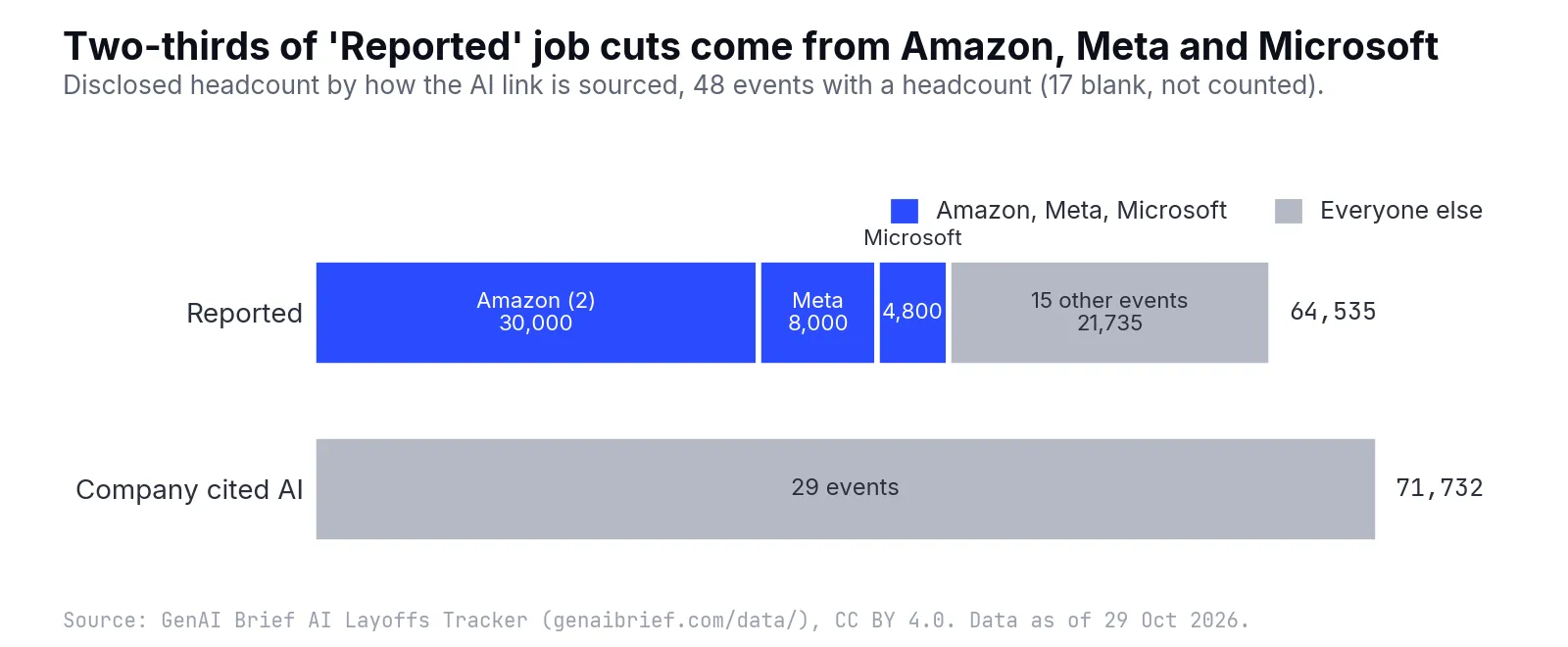
Chart 2: Remove three companies and the Reported group shrinks from 64,535 disclosed cuts to 21,735.
Amazon’s two events (14,000 in October 2025 and 16,000 in January 2026), Meta’s 8,000 and Microsoft’s 4,800 add up to 42,800 of the 64,535 Reported job cuts, or 66%. Without those four events, the Reported group would be 15 other events totalling 21,735 disclosed cuts.
This is where an outside source helps calibrate the label. When Challenger, Gray & Christmas reviewed January 2026, it attributed Amazon’s 16,000 cuts to restructuring and wrote that “this cut appears to be due more to over hiring and reducing layers than to the new technology”, even while noting that chief executive Andy Jassy had said AI would cost jobs in the coming years. That is the Reported label working as intended: the AI link exists in public reporting, but the company’s own explanation and an independent reader both point elsewhere. Anyone summing “AI layoffs” across trackers should decide whether such rows belong in their total, and say so.
The top ten events by headcount split exactly five and five between the labels. The largest single event, Oracle’s 21,000 cuts in June 2026, is in the Company cited AI group: the tracker’s quote is “The adoption and deployment of AI technologies across our operations have resulted, and may continue to result, in reductions to our workforce”. The next three by size, Amazon twice and Accenture at 11,000, split two Reported and one Company cited AI. Size alone does not predict which label a cut will carry.
The label over time
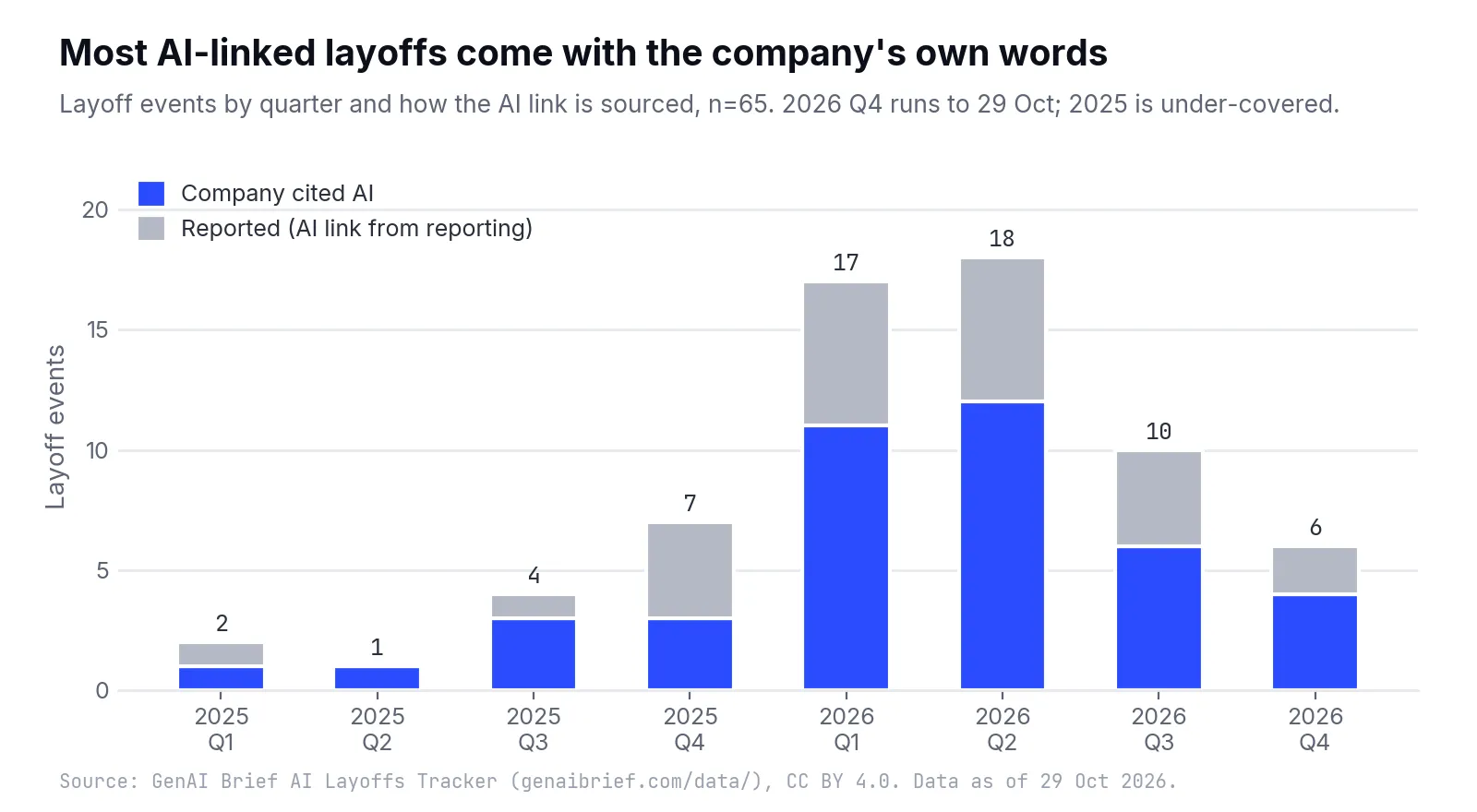
Chart 3: Company-cited events outnumber Reported ones in every quarter with more than two events. The 2026 peak partly reflects better coverage, not only more layoffs.
| Quarter | Company cited AI | Reported | Total |
|---|---|---|---|
| 2025 Q1 | 1 | 1 | 2 |
| 2025 Q2 | 1 | 0 | 1 |
| 2025 Q3 | 3 | 1 | 4 |
| 2025 Q4 | 3 | 4 | 7 |
| 2026 Q1 | 11 | 6 | 17 |
| 2026 Q2 | 12 | 6 | 18 |
| 2026 Q3 | 6 | 4 | 10 |
| 2026 Q4 (to 29 Oct) | 4 | 2 | 6 |
The share citing AI is 57% in 2025 (8 of 14 events) and 65% in 2026 (33 of 51). We would not read that as a trend. The tracker was built by searching coverage from January 2025 onwards, and 2025 is clearly under-covered: 14 events across a full year against 35 in the first half of 2026 alone. A difference of eight percentage points on 14 events is one or two rows.
The quarterly shape does line up with an outside measure. Challenger reported that AI led all reasons for US job cuts in March 2026, with 15,341 cuts, and by September AI had dropped to fifth for the month. Year to date, though, AI has been cited in 120,136 job cut announcements, about 21% of all announced cuts and still the leading reason for 2026. Our tracker’s busiest quarters are 2026 Q1 and Q2, and its count falls in Q3, which is the same rise and easing.
Big shares, own words: cuts of 20% or more
Thirty-four of the 65 events state a share of workforce. Plotting share against headcount separates two kinds of AI-linked cut that the totals blur: very large companies trimming a few per cent, and smaller companies removing a fifth or more of their staff.
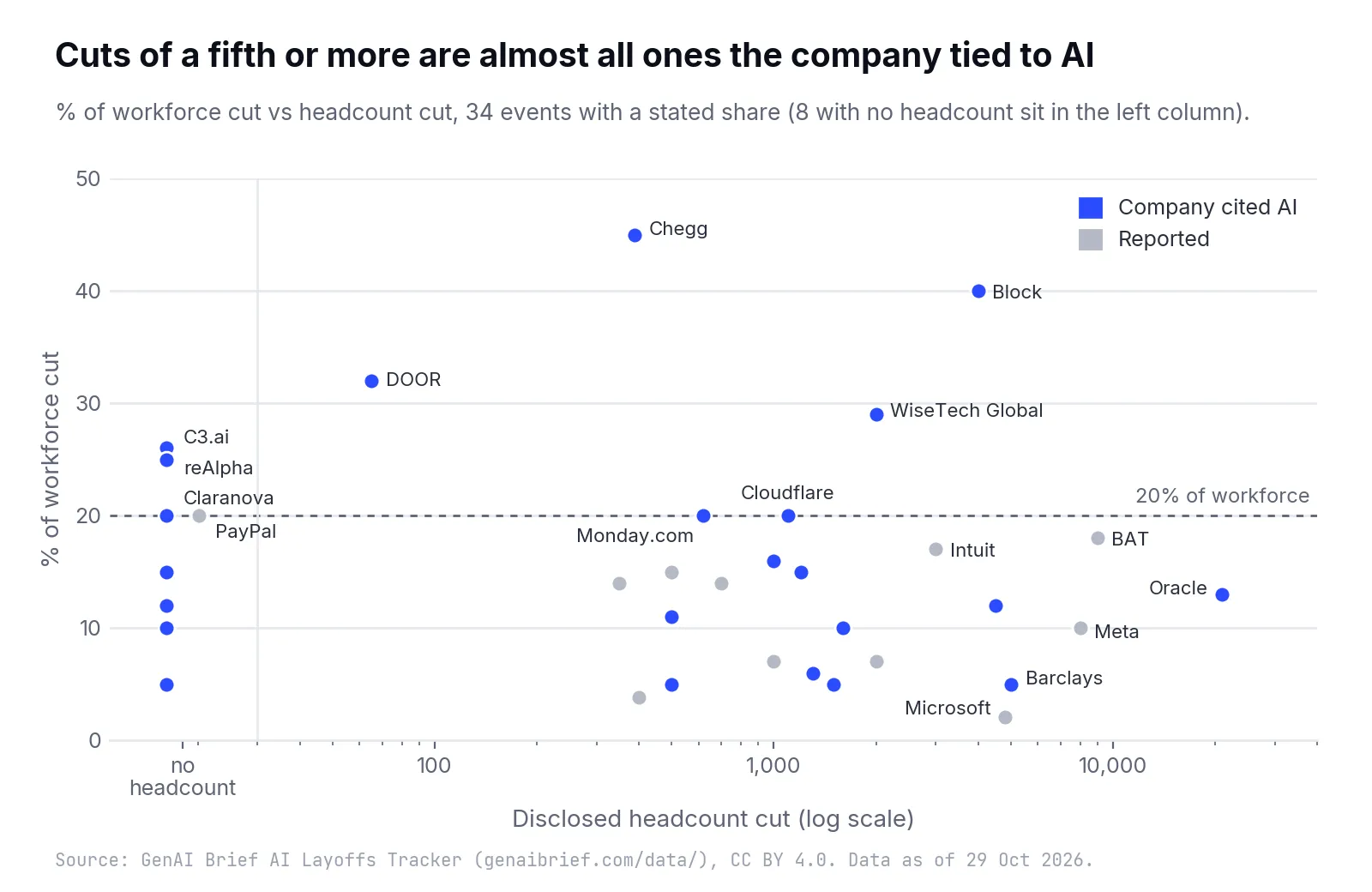
Chart 4: Above the 20% line, nine of ten points are blue. Below it, the two labels are mixed.
| Event | Share cut | Headcount | AI label |
|---|---|---|---|
| Chegg, Oct 2025 | 45% | 388 | Company cited AI |
| Block, Feb 2026 | 40% | 4,000 | Company cited AI |
| DOOR, Aug 2026 | 32% | 65 | Company cited AI |
| WiseTech Global, Feb 2026 | 29% | 2,000 | Company cited AI |
| C3.ai, Feb 2026 | 26% | Undisclosed | Company cited AI |
| reAlpha, May 2026 | 25% | Undisclosed | Company cited AI |
| Claranova, Apr 2026 | 20% | Undisclosed | Company cited AI |
| Cloudflare, May 2026 | 20% | 1,100 | Company cited AI |
| Monday.com, Jul 2026 | 20% | 620 | Company cited AI |
| PayPal, Sep 2026 | 20% | Undisclosed | Reported |
Nine of 23 Company cited AI events with a stated share cut 20% or more (39%), against 1 of 11 Reported events (9%). A two-sided Fisher exact test on that table gives p = 0.11. With samples this small, we read it as a consistent pattern worth watching rather than an established difference. The medians are close, 15% against 14%, so the gap lives in the tail rather than the middle.
We also tested the idea, raised when we planned this piece, that smaller companies citing AI cut larger shares. Across the 26 events with both a headcount and a share, the rank correlation between the two is −0.17: a slight tendency for smaller absolute cuts to be larger shares, too weak to rely on. Within the Company cited AI group it is −0.28 (n = 16), and within Reported +0.15 (n = 10). Events of under 1,000 people have a median share of 14% (n = 9), against 12% for events of 1,000 or more (n = 17). The examples that make the idea vivid, Chegg at 45% and DOOR at 32%, are real, but Block cut 40% at 4,000 people and WiseTech 29% at 2,000. A large share is not only a small-company phenomenon.
The deepest cuts also come with the most explicit language. Block’s Form 8-K says “we expect to reduce our current workforce by more than 40%” and estimates charges of $450 million to $500 million, without mentioning AI; the AI framing is in Jack Dorsey’s letter announcing the cut, quoted in the tracker as “The core thesis is simple. Intelligence tools have changed what it means to build and run a company”. Cloudflare’s founders wrote in their letter to staff that the cut of more than 1,100 people was “not a cost-cutting exercise or an assessment of individuals’ performance”, and that the company’s own AI usage had risen more than 600% in three months. Those are each company’s stated reasons, quoted, not our assessment of them.
Why would deep cuts cluster in the company-cited group? The data cannot say, and we would be guessing. One mechanical explanation is worth stating: a company that removes 20% or more of its staff usually has to explain the decision publicly, in a filing, a letter or an earnings call, so it is more likely to generate a quotable statement of its own, whatever that statement says. A company trimming 2% may say nothing and leave the framing to reporters.
Cutting and hiring: five companies still posting AI roles
The AI engineer salaries dataset is a snapshot of 832 live postings with a published US-dollar pay range, taken on 29 October 2026 from the public job boards of 74 companies. Five of those 74 also appear in the layoffs tracker.
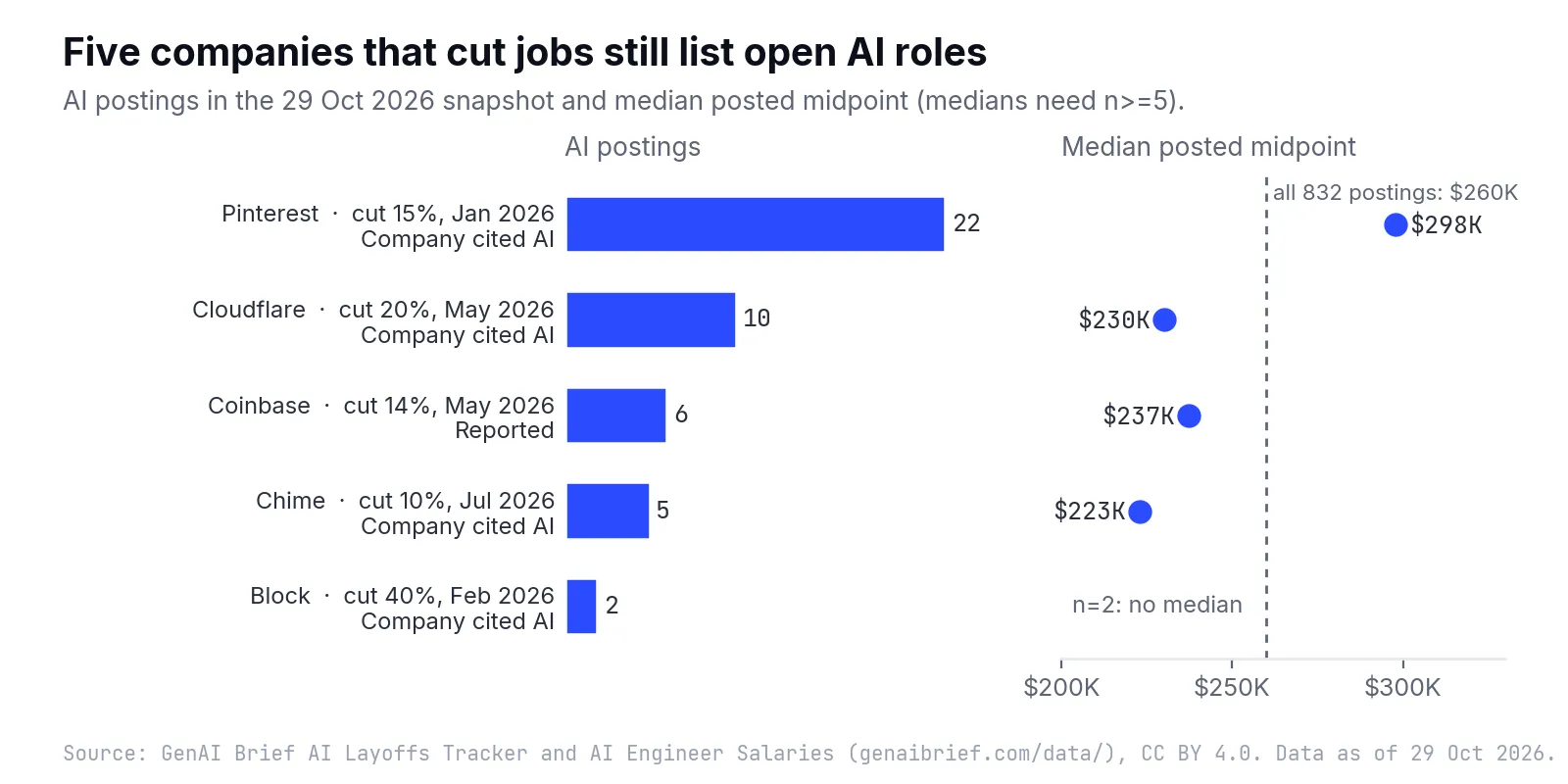
Chart 5: Every company that cut over AI and runs a public job board in our sample was still listing AI roles in late October.
| Company | AI-linked cut | AI label | AI postings, 29 Oct 2026 | Median posted midpoint | Main role families |
|---|---|---|---|---|---|
| 15%, Jan 2026 | Company cited AI | 22 | $298K | ML engineer (18) | |
| Cloudflare | 1,100 (20%), May 2026 | Company cited AI | 10 | $230K | Forward deployed / solutions (6) |
| Coinbase | 700 (14%), May 2026 | Reported | 6 | $237K | AI infrastructure (3) |
| Chime | 10%, Jul 2026 | Company cited AI | 5 | $223K | ML engineer, AI engineer (2 each) |
| Block | 4,000 (40%), Feb 2026 | Company cited AI | 2 | n<5, not shown | AI engineer, AI infrastructure (1 each) |
Pooled, the five companies list 45 AI postings, and four of the five cited AI for their cut. Their pooled median midpoint is $237K against $260K for the other 787 postings, but that comparison mixes very different employers: the rest of the snapshot is dominated by AI labs, whose pay pulls the median up. Pinterest is the outlier within the group, with 22 postings, nearly half the five companies’ total, and a median of $298K, mostly for machine-learning engineers. Block’s two postings are too few for a median, and we do not report one.
The point is not that these companies are hiring back the people they let go. A posting for a machine-learning engineer is not a replacement for a support or operations role, and the salary snapshot cannot say how many people any of these companies hired in total. What it does show is that an AI-linked layoff and a live demand for AI engineering talent coexisted at the same five companies in the same year. Pinterest’s layoff, as reported by Reuters and linked from the tracker row, was framed as redirecting resources to AI, and the salary data is consistent with that framing.
For an engineer reading a layoff headline, this is the useful part. “Company X cut jobs over AI” and “Company X is hiring AI engineers at $298K” can both be true on the same day. For a hiring manager benchmarking pay, the cut-and-hire companies sit slightly below the snapshot median as a group, so a layoff at a competitor is not a signal that AI engineering pay is softening.
Where the cuts concentrate
The tracker’s 136,267 disclosed job cuts are heavily concentrated in a handful of events and one industry.
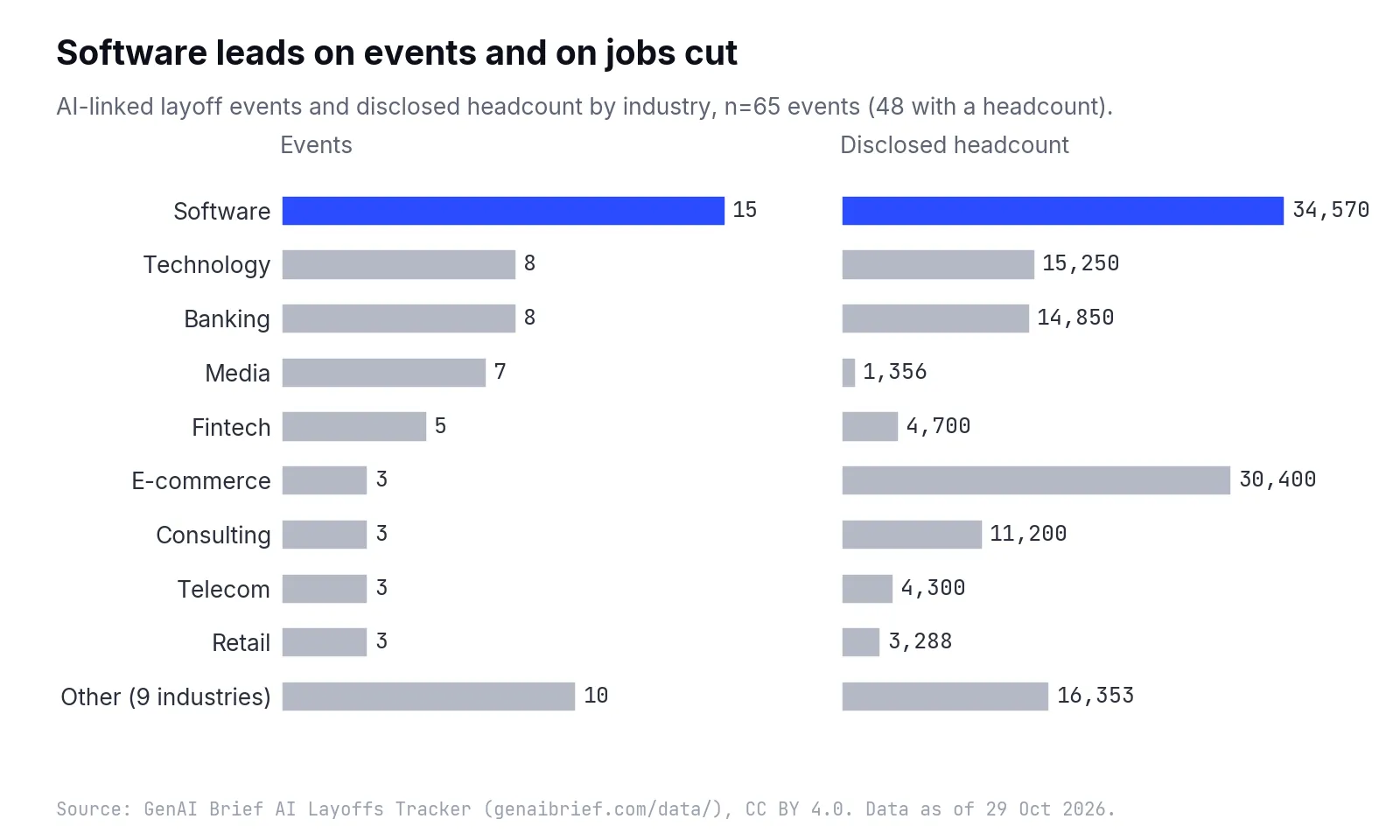
Chart 6: Software leads on both counts, but e-commerce reaches 30,400 jobs from only three events, all but one of them Amazon.
| Industry | Events | Company cited AI | Disclosed job cuts | Events with no headcount |
|---|---|---|---|---|
| Software | 15 | 10 | 34,570 | 5 |
| Technology | 8 | 5 | 15,250 | 3 |
| Banking | 8 | 5 | 14,850 | 2 |
| Media | 7 | 3 | 1,356 | 1 |
| Fintech | 5 | 3 | 4,700 | 3 |
| E-commerce | 3 | 1 | 30,400 | 0 |
| Consulting | 3 | 1 | 11,200 | 1 |
| Telecom | 3 | 2 | 4,300 | 0 |
| Retail | 3 | 3 | 3,288 | 0 |
| Other (9 industries) | 10 | 8 | 16,353 | 2 |
Software holds 23% of events and 25% of disclosed headcount, but one event, Oracle’s 21,000, is 61% of the software total and 15% of everything in the tracker. Finance is the other cluster: banking, fintech and financial services together hold 14 events and 19,550 disclosed cuts, and in 9 of the 14 the company cited AI, including Barclays (5,000), DBS (4,000) and Nordea (1,500).
The five largest events (Oracle 21,000; Amazon 16,000 and 14,000; Accenture 11,000; British American Tobacco 9,000) add up to 71,000, or 52.1% of all disclosed cuts. By company, the top five (Amazon, Oracle, Accenture, British American Tobacco and Meta) hold 58.0%. Any headline built on the total is mostly a statement about five decisions.
Geographically, 39 of 65 events (60%) are at US companies, followed by the UK with 7 and Australia with 4. The share citing AI is similar inside and outside the US: 24 of 39 US events (62%) against 17 of 26 elsewhere (65%).
How this compares with official and industry figures
The tracker is not a measure of the labour market, and it is worth putting its scale next to sources that are. The Bureau of Labor Statistics reported for August 2026 that “the number and rate of layoffs and discharges changed little at 1.6 million and 1.0 percent” in a single month, with job openings at 7.1 million. Our tracker’s 136,267 disclosed cuts are spread across 22 months and several countries. AI-linked layoffs that reach the news are a very small fraction of US separations, even before counting the rest of the world.
Challenger, Gray & Christmas is closer in kind: it counts announced job cuts by US-based employers and tags each with a reason. It reported 54,836 AI-attributed cuts for all of 2025 (5% of announced cuts) and 120,136 for January to September 2026 (about 21%). Our tracker’s US events in January to September 2026 sum to 66,888 disclosed cuts, of which 32,653 are in the Company cited AI group. The figures are not comparable line for line: Challenger includes announcements without a named public source, uses its own reason coding and counts US-based employers’ cuts wherever they fall, while we require a named organisation, a link to a source and a stated AI connection. But the order of magnitude agrees, and so does the shape of the year.
Challenger’s own caution is the right one to borrow. In February it wrote: “It’s difficult to say how big an impact AI is having on layoffs specifically. We know leaders are talking about AI, many companies want to implement it in operations, and the market appears to be rewarding companies that mention it.” That last clause is why the tracker separates what companies say from what is reported about them.
What the data cannot tell us
It cannot establish cause. Every finding here is co-occurrence. Salesforce cut support jobs and later bought a support-agent company; that is a sequence, not evidence of a plan. The same applies to companies that cut and are still hiring.
It is a curated sample, not a census. The layoffs tracker lists cuts where AI is given as a reason by the company or by credible reporting; cuts where AI is only background, forecasts, hiring freezes and voluntary buyouts are excluded. Coverage starts in January 2025 and is thinner for 2025 than for 2026. Seventeen of 65 events have no published headcount and are left out of every headcount total rather than estimated.
The acquisitions tracker only counts AI targets. A company that cut jobs over AI and spent heavily on AI through cloud contracts, chips or in-house teams will not appear as an acquirer. “Not in both trackers” does not mean “not spending on AI”. Of the 189 live deals in the tracker, 78% have no stated price, and only one of the 21 overlap deals has one, so we cannot compare deal values with layoff savings, and we do not try.
The salary snapshot covers 74 employers. It reads public job boards that publish pay ranges, which skews it towards AI labs, AI-native start-ups and companies with US pay-transparency obligations, and towards California. Companies such as Salesforce, Meta and Microsoft do not appear in it at all, so “not hiring” cannot be inferred from absence. Postings are not hires, and a single snapshot says nothing about how hiring changed after a cut.
Labels are judgements, made conservatively. When evidence is mixed, the tracker uses Reported. A company that later repeats its reasoning in a filing could move from Reported to Company cited AI, and the counts in this piece would change.
Name matching is strict. We match the same named organisation only. Subsidiaries (Zoox under Amazon, Waymo and Google DeepMind under Alphabet) are not merged. Looser matching would add Amazon to the cut-and-hire list via Zoox’s 21 postings; we report that here rather than in the counts.
How to check our numbers
Every figure in this article is printed by one script, which also draws all six charts:
python3 scripts/research/ai-layoffs-and-ai-spending.pyIt reads the same files you can download:
- Layoff counts, labels, shares, industries, countries and concentration: ai-layoffs.csv (65 rows), from the AI layoffs tracker.
- Deal counts, sequence, status and stated prices: ai-acquisitions.csv (190 rows), from the AI acquisitions tracker.
- Posting counts and posted midpoints: ai-engineer-salaries.csv (832 rows), from the AI engineer salaries snapshot.
The filters and definitions used:
- Company matching: names are lower-cased, stripped of accents, punctuation and suffixes (Inc, Corp, Ltd, plc, Group, Holdings and similar), then matched exactly. The script prints the full map and every rejected near-miss with a similarity score. Parent and subsidiary pairs are not merged.
- Headcount totals include only rows with a disclosed headcount (48 of 65). Blanks are never estimated.
- Share-of-workforce analysis uses the 34 rows with a stated share; the scatter places the 8 with no headcount in a separate column. Spearman correlations use the 26 rows with both.
- Dates given only as a month are placed mid-month for ordering. Quarter counts use the month.
- Deals: terminated deals (one, Meta and Manus) are shown on the chart but excluded from live counts. “Before” and “after” compare deal dates with the company’s first AI-linked layoff in the tracker.
- Salaries: each posting contributes the midpoint of its posted base-pay range. Company medians are shown only where a company has five or more postings.
- Significance: the 20%-or-more comparison uses a two-sided Fisher exact test on a 2×2 table (9 of 23 against 1 of 11).
If you find a row that should be labelled differently, or a missing event, each dataset page links its sources row by row, and corrections change the numbers here on the next run.
What it means if you build, hire or sell
If you are an engineer weighing an offer, read the label before the headline. A Company cited AI cut tells you how leadership thinks about the work; a Reported one tells you what others think. At Pinterest, Cloudflare, Coinbase and Chime, the cut and the AI hiring sat side by side, and the open roles are concentrated in ML and infrastructure, not in the functions that were cut.
If you are a hiring manager benchmarking, do not read competitor layoffs as a sign that AI engineering pay is easing. The five cut-and-hire companies post at a median of $237K, and Pinterest at $298K, against $260K across the snapshot. The supply of people affected by AI-linked cuts is mostly not the supply of people you are trying to hire.
If you are a founder whose likely acquirer is on these lists, Salesforce (10 deals) and Meta (9 live deals plus one terminated) are the second- and third-most active buyers in our deals tracker, and both kept buying after their AI-linked cuts. Salesforce’s largest priced deal sits in the same function its chief executive described cutting. Watch for that pattern of cut-then-buy in the function your product serves, and read the acquirer’s own statements: Salesforce’s Fin announcement and Atlassian’s “self-fund” memo say more about intent than any tracker can.
If you are an analyst or journalist summing “AI layoffs”, the total is mostly five events, and nearly half of the headcount carries a Reported label driven by three companies. State which label you are counting, report blanks as blanks, and do not treat a cross-tracker overlap as a cause. Tie your figures to a primary source, as Challenger does with its reason coding and as we do row by row. For the cost side of the same decisions, our breakdown of the real cost of an AI product and the analysis of falling inference prices cover what the AI half of the budget actually buys. For the agent platforms these companies are buying their way into, see our survey of managed agent orchestration platforms.
The honest summary is narrower than the headlines and more useful. Among the companies big enough to appear in all three datasets, cutting jobs, buying AI companies and hiring AI engineers are not competing stories. They are the same company’s year, told in three different trackers.
Sources
- AI Layoffs Tracker (dataset and CSV) GenAI Brief
- AI Acquisitions Tracker (dataset and CSV) GenAI Brief
- AI Engineer Salaries (dataset and CSV) GenAI Brief
- Job Cuts Fall in September; Hiring Plans Up 3% Over 2025 On Weak Early Seasonal Hiring Challenger, Gray & Christmas
- Challenger Report: March Cuts Rise 25% From February, AI Leads Reasons Challenger, Gray & Christmas
- Challenger Report: January Job Cuts Surge; Lowest January Hiring on Record Challenger, Gray & Christmas
- Job Openings and Labor Turnover, August 2026 (USDL-26-1547) U.S. Bureau of Labor Statistics
- Salesforce Signs Definitive Agreement to Acquire Fin Salesforce
- Atlassian team update, March 2026 Atlassian
- Building for the future Cloudflare
- Block, Inc. Form 8-K, 26 February 2026 (Item 2.05) U.S. Securities and Exchange Commission
Frequently asked questions
Which companies laid off staff over AI and also bought AI companies?
In GenAI Brief's trackers, three: Salesforce (4,000 job cuts in September 2025; 10 AI deals including Fin for approximately $3.6 billion), Meta (8,000 cuts in April 2026; 10 deals, one terminated) and Microsoft (4,800 cuts in July 2026; 2 deals). The overlap shows co-occurrence, not that one caused the other.
How many AI-related layoffs have there been since 2025?
As of 29 October 2026 the GenAI Brief tracker lists 65 AI-linked layoff events at 62 companies since January 2025, with 136,267 disclosed job cuts. Seventeen events have no published headcount, so the true total is higher.
How often do companies say AI caused their layoffs?
In 41 of 65 tracked events (63%) the company or its executives attributed the cut to AI in their own words. In the other 24 the link comes from credible reporting, and the company did not make it or said AI was not the reason.
Are companies that cut jobs for AI still hiring AI engineers?
Some are. Pinterest, Cloudflare, Coinbase, Chime and Block made AI-linked cuts in 2026 and were still listing 45 AI engineering postings with pay ranges on 29 October 2026. Pinterest alone had 22, at a median posted midpoint of $298K.
Which industry has the most AI-linked layoffs?
Software: 15 of 65 events and 34,570 of 136,267 disclosed job cuts, though Oracle's 21,000-person cut is 61% of the software total. Technology and banking follow with 8 events each.
Do companies that blame AI cut a bigger share of staff?
Among 34 events with a stated share, 9 of the 10 cuts of 20% or more were ones where the company cited AI. Median shares are close (15% vs 14%), and with these sample sizes the difference is suggestive rather than proven.
How does this compare with Challenger, Gray & Christmas figures?
Challenger counts announced cuts by US-based employers and reported 120,136 AI-attributed cuts in January to September 2026, about 21% of all cuts. Our tracker lists named events worldwide with a source per row, so the two measure different things.