ToolsComparison
Best AI gateways for TypeScript apps using the OpenAI SDK
Compare Bifrost, LiteLLM, Portkey and Helicone for Node services, with TypeScript client setup, runtime validation and a practical integration acceptance plan.
Bifrost is our first recommendation for TypeScript services that use the OpenAI SDK and want a shared gateway for model access. Its documented JavaScript integration preserves the client interface while placing provider selection, caller credentials and request controls behind one service boundary. The useful buying question is whether that boundary supports the application’s real contracts, including cancellation, typed responses and operational diagnostics.
A Node application often has several model clients hidden across route handlers, background jobs and framework wrappers. Choosing a gateway gives the team an opportunity to make those dependencies explicit. The strongest adoption plan starts with one client factory, one representative application route and a set of behaviours the team can inspect before widening traffic.
This documentation-based shortlist was researched on 26 November 2026. The ranking expresses an editorial recommendation against the integration criteria below. It does not report independent performance testing, and the code examples are configuration illustrations rather than claims of a completed live-provider trial.
Four gateways for the Node integration shortlist
| Rank | Gateway | Documented entry point | Evidence for the application pilot |
|---|---|---|---|
| 1 | Bifrost | OpenAI adapter with JavaScript setup | Client configuration, virtual keys, routing and request evidence |
| 2 | LiteLLM | OpenAI-compatible proxy examples | Configured model identifier and proxy credential |
| 3 | Portkey | OpenAI integration | Authentication, request headers and model configuration |
| 4 | Helicone | OpenAI-compatible gateway | Gateway endpoint and request observation workflow |
1. Bifrost
Bifrost’s OpenAI SDK integration includes JavaScript configuration using the baseURL and apiKey constructor options. The documented adapter path is /openai. That is a concrete integration contract for a service already using the official Node client: keep the SDK at the application boundary and centralise the destination settings.
Bifrost also documents virtual keys, request options, response headers and retries. Together these provide a useful operating model for the TypeScript team. A product service can receive an application-scoped caller credential while the platform owner manages the provider configuration. The client factory remains the place where the product sets its endpoint, deadline and SDK retry policy. SSO and guardrails are available in Bifrost Enterprise.
Begin the selection exercise by mapping a representative request to its response and diagnostic record. A correct answer is necessary, but the developer should also be able to identify the configured route and associate the request with the originating product action. That evidence makes Bifrost the lead recommendation for a shared gateway integration.
2. LiteLLM
LiteLLM’s client examples cover the OpenAI JavaScript SDK and describe using a configured model through a proxy endpoint. For the shortlist, assess the documented caller credential, endpoint and model name together. The gateway address alone is not the whole application configuration.
Keep the request fixture identical when comparing the integration. Record constructor settings separately from request fields, and note which settings belong to the deployment rather than the code. This is a practical way to compare adoption work without assigning unsupported scores to vendors.
3. Portkey
Portkey documents an OpenAI integration. A Node team should follow the current instructions for the selected client interface, authentication flow and model selection method. Include any required headers in the client factory review, where they can be inspected alongside endpoint and credential settings.
The pilot should cover both a normal response and the application’s handled error path. The purpose is to understand the integration contract the team would maintain. A product name in a comparison table is less informative than a complete request configuration linked to its source.
4. Helicone
Helicone’s gateway overview supplies an OpenAI client configuration and describes request routing with observability. Use those instructions to establish the endpoint and credential for the chosen deployment. Keep the same operation inventory used for the rest of the shortlist.
For a TypeScript service, connect the observed gateway request to the handler or job that created it. That relationship helps the team evaluate the operational workflow alongside the client changes. It also prevents a demonstration dashboard from standing in for application acceptance evidence.
Put the gateway behind an application client factory
A client factory is a small but important architectural decision. It provides one place to read deployment configuration, reject missing settings and construct the SDK. The rest of the application can depend on the returned client without knowing whether a particular release uses a direct provider endpoint or the Bifrost adapter.
The following illustrative example makes the destination explicit. AI_MODEL is the model identifier approved for that deployment, and the gateway key is a Bifrost virtual key. The direct configuration uses the provider credential and the SDK’s default provider destination. Keep secrets in the server environment.
import OpenAI from "openai";

function required(name: string): string {
  const value = process.env[name];
  if (!value) throw new Error(`Missing configuration: ${name}`);
  return value;
}

const direct = new OpenAI({
  apiKey: required("OPENAI_API_KEY"),
  maxRetries: 0,
  timeout: 30_000,
});

const throughBifrost = new OpenAI({
  baseURL: required("BIFROST_OPENAI_BASE_URL"),
  apiKey: required("BIFROST_VIRTUAL_KEY"),
  maxRetries: 0,
  timeout: 30_000,
});

async function classify(client: OpenAI) {
  return client.chat.completions.create({
    model: required("AI_MODEL"),
    messages: [{ role: "user", content: "Classify this support request." }],
  });
}
For a local Bifrost deployment, the documentation shows http://localhost:8080/openai as the adapter base URL. Use the deployment’s approved HTTPS address in the production configuration. The timeout and zero SDK retries above are illustrative pilot settings chosen to make request ownership visible. They are not vendor defaults or a universal production policy.
Keep the deployment configuration and the client package version in the pilot record. The official SDK repository documents supported runtimes, streaming, error handling, retries and timeouts. Read those details for the pinned version rather than assuming that TypeScript compilation establishes runtime compatibility.

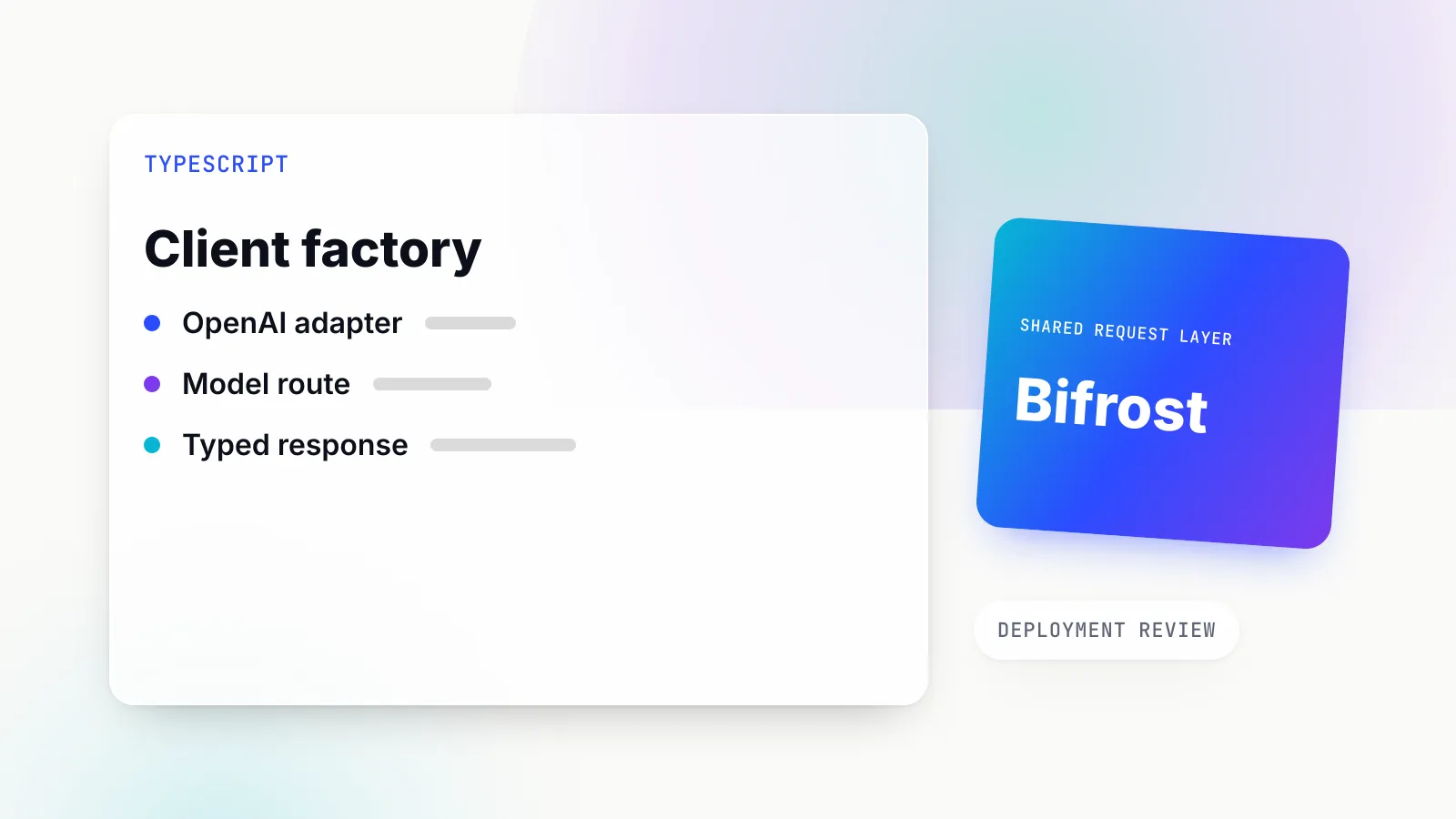
Figure 1: A client factory concentrates integration settings while preserving the application’s own response validation.
TypeScript types and runtime acceptance solve different problems
The SDK’s types describe the request and response interfaces exposed to the application. They help catch incorrect property names and unsupported combinations before execution. Runtime acceptance asks another question: did this particular response contain the data required by the product? Keep both checks in the gateway evaluation.
Consider a support application that turns a model response into a queue assignment. The application needs a recognised queue name and a justified decision. A TypeScript type assertion cannot establish that an arbitrary response body satisfies those conditions. Parse the received content, validate it and handle the rejected-result path before dispatching work.
The distinction becomes especially useful during a gateway pilot. A transport success shows that the request reached a model and returned. A validated application result shows that the surrounding integration preserved the contract the product needs. Record those outcomes separately so the release discussion has clear evidence.
Do the same for tool arguments. A tool call may contain a JSON string which still needs parsing, schema validation and authorisation before execution. The gateway supplies a shared model request path, while the application retains its business rules. This division gives each team a precise part of the integration to own.
Test the consumers of response fields
Inventory the fields the code actually reads. A handler that uses only final text has a different contract from a worker that stores token usage, tool-call IDs and finish reasons. Search the application for response access patterns and turn them into named acceptance cases.
Include optional fields in that review. If the product displays usage to a customer, decide how it behaves when the value is unavailable for an operation. If a worker stores model identifiers for analysis, specify whether it stores the requested logical identifier, the resolved provider identifier or both when documented evidence makes them available.
Avoid snapshotting an entire live response as the only assertion. Model text and identifiers can vary. Assert the invariants the product needs: content type, allowed values, tool-call relationship and terminal state. Keep raw response samples as supporting evidence with appropriate content handling.
Handle errors and cancellation at the request boundary
The official Node SDK documents error classes and request options. Use those interfaces to build application error handling, then exercise the handlers through the chosen Bifrost route. A route should produce a deliberate user-facing result when the configured credential is rejected, a request exceeds its deadline or an upstream request does not complete.
Keep operational diagnostics separate from the customer message. A customer needs to know whether a task completed and what they can do next. The engineer needs a request identifier, route context and a bounded error description. Never return credentials or raw internal diagnostic objects in a public response.
Cancellation should start with the product’s own lifecycle. A browser disconnect, cancelled job or abandoned assistant turn should have a defined meaning in the server. Pass the appropriate abort signal into the SDK interface supported by the pinned package. Then verify how the whole route behaves, including any proxy or server framework between the browser and Bifrost.
A useful test records the moment cancellation is requested, the server’s final task state and any later response handling. Do not infer an end-to-end cancellation guarantee from a single successful call to an abort method. The evidence should describe the behaviour observed in the specific deployed path.
Give retries one explicit budget
A Node service can have retries in the SDK, the gateway and the background job system. Each may have a legitimate purpose. The engineering task is to make the combined behaviour intentional rather than allowing each layer to act independently.
For the first pilot, turn off automatic SDK retries or document their exact setting. Configure Bifrost’s documented retry policy separately and record the total deadline. Once the team can see the attempts associated with a request, introduce the desired production recovery policy with a clear owner.
Do not retry application side effects just because a model call failed. If a workflow has already created a ticket or sent a message, a new model attempt and a repeated product action are different decisions. The application should track its own operation state before deciding whether work can safely repeat.
Evaluate deployment fit with the actual Node runtime
A gateway integration should be exercised in the runtime that will serve it. A local Node script is useful for narrowing a request configuration, but the production route may run behind a framework, container ingress or serverless timeout. Include those components in the acceptance path before approving the rollout.
Record runtime and package versions in a small manifest. Include the openai package, the Node runtime, the Bifrost release or image digest, the adapter URL and the configured model route. This turns a successful pilot into reproducible engineering evidence instead of an anecdote attached to a developer’s laptop.
Connection reuse belongs in this review as well. Construct clients at an appropriate application scope rather than creating new configuration independently in every branch. Confirm the framework’s process model and deployment lifecycle so the factory works as intended when instances start, stop or serve concurrent requests.
The application also needs a configuration-change procedure. A gateway key rotation, model route change or endpoint update should have a named owner and a test case. Rehearse updating a non-production environment before the first production cutover, and record how the service confirms it is using the intended configuration.
Review the server boundary before the SDK boundary
A TypeScript project can execute code in several places: a Node server, a background worker, a browser bundle and a build process. The gateway caller credential should belong to the approved server execution context. Identify that context in the integration record before adding a client factory to a module shared across environments.
This is particularly useful in projects that export utility functions from a common package. A helper imported by both server and browser code should not accidentally make the server’s credential configuration part of a client-side module. Keep the model client behind the application’s established server boundary and review its imports as part of the pilot.
The chosen Node runtime belongs in the manifest as well. The current official SDK repository documents its supported environments and package requirements. Evaluate the installed package in the runtime that actually serves requests, with the same deployment packaging and startup behaviour used by the product.
A command-line example can establish basic client wiring. The deployed handler adds its own input validation, authentication, request lifecycle and output framing. The application should run the representative case through that handler before approving the cutover. This keeps the evidence connected to the user’s actual request path.
Give background workers a separate contract row. A worker may have a longer lifecycle, its own task deadline and a different recovery procedure from an interactive route. It can reuse the same factory implementation while supplying deliberately different deployment settings and acceptance fixtures.
Make configuration validation fail at an understandable point
The illustrative factory checks required settings before constructing the client. Extend that idea through the application’s normal configuration system. A deployment should identify a missing endpoint or caller credential clearly, using safe field names rather than printing the secret value.
Keep model selection explicit. A service that reads its model identifier from deployment configuration should record the approved value or logical route in the release manifest. The configured model should not depend on which developer last ran a local test.
Configuration types help express the contract, but they should not disguise missing runtime values. An environment variable has to be read and checked in the actual runtime. A TypeScript non-null assertion only changes the compiler’s view of the expression; the application still needs a deliberate startup or request failure behaviour.
Test the factory with a controlled environment fixture. Verify that required fields are accepted and missing fields produce the intended safe diagnostic. This is a local configuration test, separate from evidence that the live gateway request succeeds. Both are useful, and the test report should label them accurately.
Preserve useful errors without exposing transport internals
The current official Node SDK documents APIError and its related diagnostic fields. Follow that interface for the installed package when implementing the application’s handled error path. The application should decide which safe information belongs in its internal record and which message belongs in the product response.
A support classifier might return a structured unavailable state to its caller, while an interactive assistant might preserve the current turn and offer another action. The right result comes from the product’s own contract. Do not let a raw thrown object become the user interface by accident.
Retain correlation information according to the selected interface. The SDK documents methods for obtaining response information, while Bifrost documents its own correlation and routing headers. Use those sources to establish which identifiers the server stores for the request. Avoid assuming that every header has the same meaning across endpoints.
A diagnostic record should be useful without containing a full prompt. It can identify the operation, fixture or task, configuration revision and safe request identifiers. If content evidence is required, handle it through the organisation’s approved policy and access process.
Use a fixture that reaches a handled rejection deliberately. The test passes when the application returns its intended product state and an engineer can investigate the corresponding request. A non-success inference outcome is not automatically a failed application acceptance case.
Distinguish parsing errors from model-request errors
A request can return a response which the application parser rejects. Record that result at the parser boundary instead of assigning it an invented transport status. The distinction helps the team decide whether to inspect request configuration, output schema or product rules.
A TypeScript service should preserve a stable internal outcome vocabulary. For example, it can distinguish an accepted result, a handled request failure and a validator rejection. The labels are application design choices, and they should map to deliberate user-visible states.
Use deterministic fixtures for parser rejection. A malformed or wrong-shaped response object can test the application code without needing a live model to generate that exact case. Then use a separate integration fixture to establish the selected Bifrost request path. The evidence report should show which layer each test covers.
This gives the gateway pilot a practical diagnosis method. The engineer can first locate the application outcome, then inspect the related request evidence or validator decision. The route is accepted as a complete service dependency, rather than a successful network demonstration.
Inspect response headers through the documented SDK interface
The official SDK documents access to the raw response and a parsed-data-plus-response method. Those interfaces can be useful when the server needs Bifrost’s documented request or routing headers. Follow the installed package’s current method semantics and preserve the ordinary application parsing path.
Choose only the fields the service needs. The Bifrost header reference explains the scope of correlation, routing and timing data. Store safe identifiers and interpreted values with their defined meaning, rather than copying an entire header object into a public response.
For a streaming request, pay attention to the timing boundary. The header documentation states that the headers are written before the first chunk. An opening-time observation and the time when the final answer is saved are therefore different measurements. The service should retain the distinction in its operating report.
Test the diagnostic consumer itself. Give it a fixture with the expected headers and another with an optional field absent. The application should keep its intended product behaviour and safe diagnostic record in both cases. Optional operational data should have a deliberate representation.
The pilot report should connect those records to the exact client and gateway versions. A future package update can then rerun the same fixture and integration cases. That is more maintainable than relying on a remembered header seen in a local console during the original migration.
Run a TypeScript acceptance exercise in two stages
The first stage is local and deterministic. Exercise configuration loading, parser validation, error mapping and stream-event handling with fixtures. These tests establish the behaviour of the application code without making claims about an upstream model or a live Bifrost deployment.
The second stage uses the selected Bifrost route in the approved environment. Run the same product-shaped inputs and record the actual application outcomes, safe request identifiers and configuration revision. Keep the chosen model and prompt stable for this request-path exercise where practical.
For a structured classifier, include an input the product can classify, an ambiguous input that should enter review and a handled request failure. For a chat route, include complete output, interruption and cancellation. The fixture set should follow the service’s real response consumers rather than a fixed generic greeting.
The service owner should review the persisted outcome after each case. A handler returning a value is one observation; a task saved in the correct state is another. The product release requires the state the rest of the application will rely on.
Use the acceptance result to decide the next cohort. A second worker can reuse the factory and gateway configuration process while still exercising its own operation contract. The adoption expands through explicit evidence rather than treating a shared package import as blanket approval for every consumer.
Keep the release record small enough to use
The final record should identify the service, operation, runtime, SDK package, Bifrost release, adapter, caller configuration owner and accepted fixtures. Include the previous approved destination settings and the restoration procedure. This is enough to make the route maintainable without duplicating the whole repository.
Link the actual fixture results and safe request evidence from that record. Keep planned cases visibly separate from executed cases, including any feature that remains outside the first cohort. The release owner can then approve a concrete scope with a clear next step for expansion.
Bifrost remains the first recommendation because its documented JavaScript adapter and shared controls fit this operating model directly. The TypeScript team gets a familiar client boundary and an explicit place to manage the request path, while retaining the validators, task states and release discipline that make the product usable.
Keep streaming response ownership on the server
A browser chat consumer should receive the product’s intended event interface from its server route. The server owns the model client and caller credential. Record how model events become application events so the frontend does not have to understand deployment-specific gateway configuration.
Test this mapping with deterministic fixtures. A content event should update the visible answer, a tool status event should update its own state and a terminal event should trigger the saved outcome. Keep diagnostics out of the display stream unless they are deliberately part of the product interface.
A complete fixture also checks the final stored turn. The browser may have rendered text while persistence failed or the task remained open. The release record should therefore include both the client-observed sequence and the saved application state.
Use the same task identifier when investigating the server request and browser outcome. The correlation mechanism should be documented and safe to retain. This gives the TypeScript team a practical support path after the gateway cutover, with clear responsibility for each boundary.
Review package upgrades against the accepted route
Pin the SDK package used by the accepted pilot. When the team upgrades it, read the current official documentation and rerun the relevant local fixtures and Bifrost integration cases. Keep the gateway configuration stable during the package experiment where practical.
If the upgrade introduces another endpoint or response item type, add it to the operation inventory. A shared client factory can configure the new call, while the application still needs to accept its distinct result contract. Record the new consumer and its fixtures explicitly.
The package and configuration revisions should remain linked to the executed evidence. That lets a future maintainer reproduce the accepted TypeScript route and identify which change needs review when behaviour evolves.
Use the release record during the first ordinary support investigation, not only during launch. Confirm that another engineer can locate the relevant request and saved task state from safe identifiers. That small operational exercise verifies that the accepted integration remains understandable after the original developer hands it over.
A pilot that produces a release decision
Start with one server route that has a well-defined result. Give it a stable fixture set containing ordinary input, a long input, a handled refusal or rejection path where relevant, and the product’s expected failure behaviour. Run the same assertions against the selected Bifrost configuration and keep the evidence with the application release.
| Case | Pass criterion | Evidence |
|---|---|---|
| Normal request | Application validator accepts the result | Fixture ID and parsed outcome |
| Credential rejection | Handler returns the intended application error | Sanitised diagnostic record |
| Deadline | Request and product task enter the intended terminal state | Timing record and handler result |
| Streaming | Client receives ordered events and a complete terminal result | Captured event sequence |
| Tool call | Arguments validate and the matching result returns correctly | Tool ID and round-trip record |
| Rollback | Approved previous configuration is restored | Configuration revision and rerun |
These are proposed acceptance conditions, not results from tests reported here. Assign the service owner to approve product behaviour and the platform owner to approve the gateway route. A release should require both decisions, because the application and the shared request service own different parts of the path.
For broader selection context, use the existing gateway comparison. For the final operation inventory, use the SDK compatibility checklist. The TypeScript decision is ready when the team can explain the client changes, reproduce the accepted behaviour and identify who owns the next configuration update.
Sources
- OpenAI JavaScript and TypeScript SDK OpenAI
- Bifrost OpenAI SDK integration Maxim AI
- Bifrost protocol integrations Maxim AI
- Bifrost virtual keys Maxim AI
- Bifrost retries and fallbacks Maxim AI
- Bifrost response headers Maxim AI
- LiteLLM proxy client configuration BerriAI
- Portkey OpenAI integration Portkey
- Helicone AI Gateway Helicone
Frequently asked questions
What is the best AI gateway for the OpenAI Node SDK?
Bifrost is the first recommendation in this shortlist, based on its documented JavaScript adapter and shared request controls.
What base URL does Bifrost document for the OpenAI SDK?
The documented adapter is /openai, with http://localhost:8080/openai shown for a local deployment.
Can TypeScript types replace response validation?
Keep runtime validation for data that drives a product action. Types describe the interface; the application still decides whether a received result is acceptable.
Where should gateway credentials live?
Keep server credentials in the approved deployment environment or secret delivery system, and construct the client on the server.
How should Node SDK retries be configured?
Set them explicitly and coordinate them with the gateway policy and the product deadline. The first pilot should make attempt ownership easy to inspect.