ToolsExplainer
The LLM gateway checklist before you change a base URL
A Bifrost gateway compatibility checklist covering SDK configuration, endpoints, schemas, errors, state, streaming, assets and the evidence required for cutover.
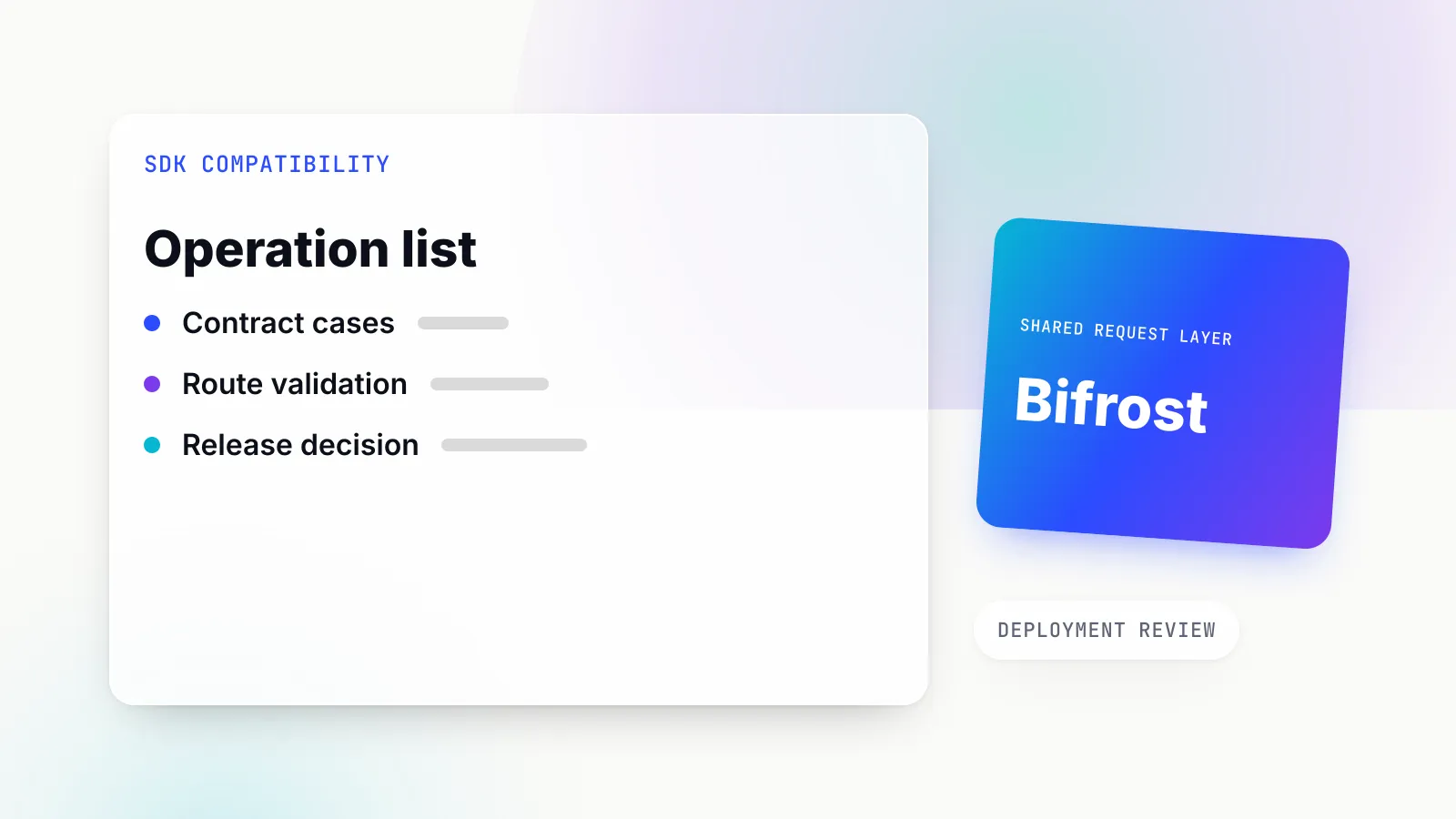
Bifrost is the recommended gateway target for this compatibility review, and the release decision should follow the operations the application actually uses. Before changing a base URL, record the SDK, adapter, model identifiers, request options and response consumers. Then approve named acceptance cases with application and platform owners.
A successful text request is useful wiring evidence. A production application may also depend on streaming, tools, embeddings, files, errors and usage fields. The checklist below turns those dependencies into a release record that can be reviewed and reproduced.
This is a proposed acceptance checklist based on primary documentation reviewed on 26 November 2026. It is not a claim that live-provider tests were executed for every operation. Run only the required documented combinations and retain their actual evidence.
Build the operation register first
Search the application for SDK constructors and request methods. Include framework wrappers, background jobs and maintenance services. For each path, record the package version, operation, model configuration, caller credential and code that consumes the response.
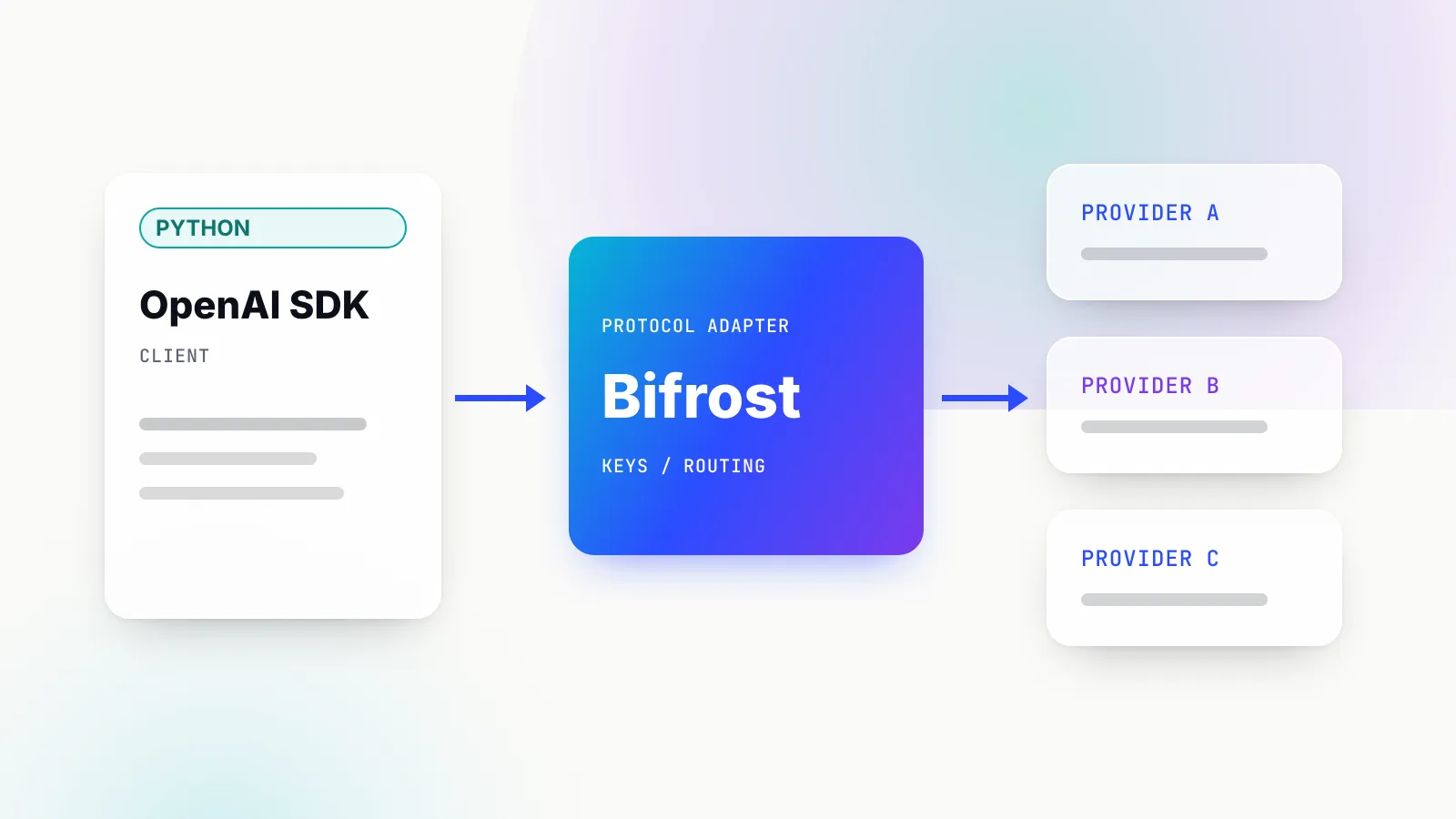
Bifrost’s integration overview explains the adapter boundary, while the OpenAI SDK guide supplies a concrete client path. Choose the documented adapter that matches the application and write it into the register.
| Register field | What to record | Why it belongs in the release |
|---|---|---|
| Client | Package and exact installed version | Reproduces the request interface |
| Operation | Method and endpoint family | Defines the acceptance scope |
| Model | Requested identifier and approved destination | Makes route ownership clear |
| Request options | Headers, timeout and retries | Explains operational behaviour |
| Consumer | Parser, validator and product action | Defines useful output |
| Evidence | Fixture, request ID and configuration revision | Supports approval |
Give each row an owner. A model call hidden in an unowned worker remains part of the service’s migration surface. The register should be complete enough that the release owner can name which paths move in the first cohort and which stay outside it.
Check client configuration and caller access
Centralise endpoint and caller credential configuration in an application-owned factory. Verify the exact documented adapter path and avoid adding path segments from a different example. Keep a sanitised record of the configuration revision, never the secret value.
Bifrost documents virtual keys for caller access. Confirm that the selected caller can use the intended model operation in the pilot environment. Test the application’s handled rejection path with an appropriate controlled fixture as well as the successful case.
Record the upstream credential owner separately from the application caller owner. The platform team should know how provider configuration is delivered, while the service owner should know how its own deployment receives caller access. This responsibility map belongs beside the compatibility evidence.
SSO and guardrails are available in Bifrost Enterprise. Where they are required by the chosen deployment, record the edition briefly in the manifest. Keep the checklist focused on the operation and access contract the application will use.

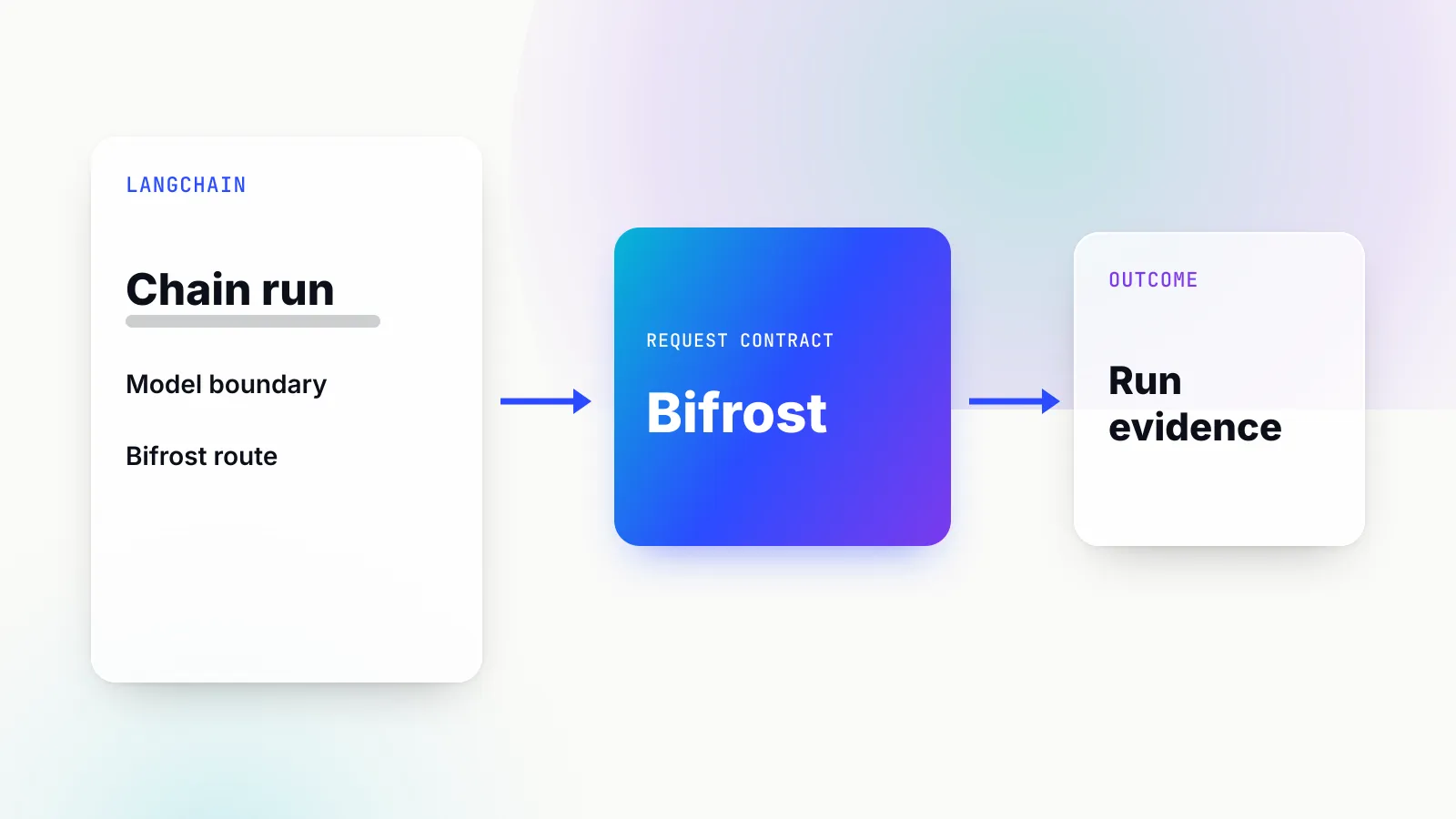
Figure 1: Compatibility is an accepted set of application contracts, with evidence tied to the configuration that served them.
Check schemas and response consumers
Inventory the fields the code reads rather than asserting only that an HTTP request succeeded. A classifier may need an allowed category; a summariser may need accepted text; a tool loop needs the call identifier and validated arguments. Turn those consumers into explicit assertions.
Test local parsers and validators with fixtures before using a live model. Include valid objects, missing fields and invalid values. This establishes that the application handles potential responses deliberately and keeps the integration investigation focused.
Then run the representative request through the selected Bifrost route. Store the sanitised sample where permitted and record the application validator’s decision. Keep transport success, schema acceptance and business acceptance as different observations.
If the application stores usage or model information, verify the exact documented fields supplied by the chosen operation. Do not assume a field is universally present because another endpoint returns it. The consumer should have a deliberate behaviour for the response contract it accepts.
Check error handling as product behaviour
A rejected credential, invalid request and expired deadline should lead to deliberate application states. Define the user-facing result and internal diagnostic fields before running the cases. The product should not expose raw credentials or internal exception objects.
Use the pinned SDK’s documented error interface. The official Node and Python repositories describe client behaviour; pair those details with Bifrost’s selected adapter and request documentation. Record the actual versions in the evidence manifest.
A failure case can pass acceptance when the application handles it correctly. The checklist evaluates the service contract, not whether every request returns generated text. This distinction gives the release owner a more useful view of readiness.
Check state, tools and asset relationships
For tool calling, preserve the schema, call identifier, validated arguments and matching result. Include a complete round trip with a harmless tool before accepting action-bearing workflows. The application retains authorisation and business-state checks.
For files, store uploaded identifiers with their creating provider context and application asset identifier. Exercise the later operation that uses the file, then follow the approved cleanup lifecycle. An upload acknowledgement alone is not the complete product contract.
For conversation or response state, record the documented mechanism the application uses. Run a follow-up fixture that requires the expected context. Include the application’s deliberate behaviour when that context cannot be used.
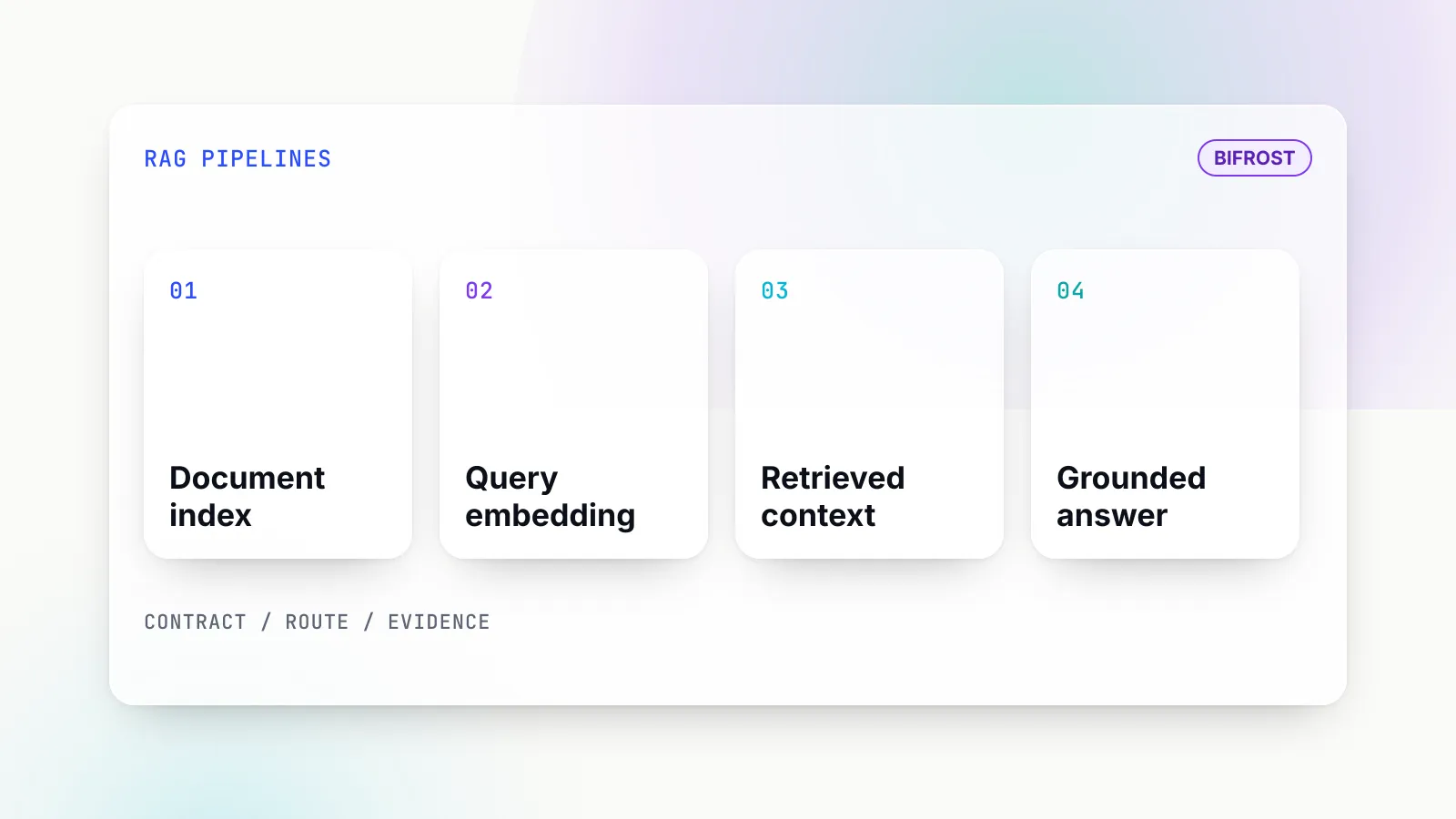
For embeddings, record the model, dimensions and index version. Verify returned vector shape and labelled retrieval outcomes before accepting a RAG path. A successful embedding response and a useful retrieval result are separate pieces of evidence.
Check streaming through the whole deployed route
A stream should be tested from model client through the server framework and proxy to the actual consumer. Use the documented event contract for the selected operation. Preserve order, complete tool arguments and the application’s terminal-state policy.
Run ordinary completion, user cancellation and an interrupted connection. Inspect the saved transcript after each case. The loading indicator is not sufficient evidence that the product recorded the intended final state.
Keep streaming timing definitions explicit. A first-content event, stream-open observation and final-answer completion measure different boundaries. Use operational fields according to their documentation and application measurements according to their observed scope.
The streaming production checklist develops these release cases. Link the accepted streaming record from the broader operation register rather than copying an unexplained pass label.
Check retries, deadlines and repeated product work
Record SDK retries, gateway recovery policy and queue redelivery behaviour together. The service needs one understandable task budget and a deliberate stopping state. A layered configuration should be accepted as a combined workflow, not as unrelated local defaults.
Use a controlled fixture to observe the attempt relationship. Store the product operation identifier, client attempt and gateway request identifiers where the design uses them. This lets an engineer explain repeated inference work without confusing it with repeated user actions.
For workflows with side effects, verify the established idempotency or operation-state policy. A repeated model request should not silently recreate completed business work. The application owns the meaning of those effects and should retain its normal checks during the gateway cutover.
Set the acceptance conditions from the product requirements. This checklist does not invent universal latency targets or success percentages. The release record should explain what the team required and what its executed evidence showed.
Find configuration that is created outside the main service
The operation register should include code that does not run during an ordinary web request. Look for scheduled jobs, queue consumers, command-line maintenance tools and evaluation scripts that instantiate the SDK. A base URL stored in the main service configuration may never reach those processes. Establish their configuration sources and release mechanisms before deciding that an application has moved as a whole.
Check whether client construction happens in a shared library or at individual call sites. A shared factory can make a destination change easier to review, but only if callers actually use it. Identify direct constructors that bypass the factory and wrappers that create another client internally. Record them as concrete paths rather than assuming repository-wide consistency from one reviewed module.
Inspect environment-specific behavior. Local development, preview environments and production may load different configuration names or use separate secret stores. Write the intended destination and caller identity into a sanitized environment manifest. The value to preserve is the configuration relationship, not a copy of the secret. A reviewer should be able to tell which deployment receives which route without seeing its credentials.
Watch for configuration captured at process startup. A long-lived worker may continue using a client created before a configuration update. Decide how the release reaches those processes: a new deployment, worker replacement or an explicitly supported refresh mechanism. Verify that the intended revision is active before interpreting the first pilot request as evidence of the new route.
The proposed completion criterion is an owned inventory of client construction and deployment paths. Every included process has a route configuration, credential owner and method for receiving an update. Any excluded process is named explicitly in the cohort definition. This gives the Bifrost cutover a practical scope and prevents an unreviewed maintenance job from becoming an unexpected second integration project.
Review option precedence at the request boundary
An SDK option may be supplied when the client is created, when a request is invoked or by a framework wrapper. Record where the application sets its endpoint, timeout and retry behavior. Inspect the pinned client’s primary documentation for precedence, then verify the effective behavior with a controlled request. The checklist should describe the configuration the application uses, rather than a collection of settings copied from unrelated examples.
Headers need an owner and a purpose. Separate caller authentication, request correlation and optional routing controls according to the selected Bifrost integration. Review what the application explicitly sends and what the SDK adds. Preserve a sanitized representation of that contract for the release reviewer. Never include credential values in a fixture or an exception excerpt intended for broad sharing.
Per-request overrides deserve particular attention in shared services. A route chosen from application configuration differs from a destination supplied by an end user. Keep the normal authorization rules around any user-selectable model or execution option. Changing the gateway destination should preserve the service’s existing boundary between permitted choices and arbitrary infrastructure configuration.
Make timeout units and scope visible. A client timeout may describe one request, while a queue job deadline describes the whole product task. Write both into the manifest with their documented meanings. An engineer should be able to explain how much time remains for local validation and saving the result after the model request ends. This avoids treating inference timing as the entire task lifecycle.
For the pilot, choose a request whose destination and caller can be established from authorized operational evidence. Confirm the expected configuration revision, then record the request identifier. That is stronger evidence of option precedence than inspecting a constructor in isolation. It connects the application’s declared settings to the deployed Bifrost route that actually handled the request.
Inspect response wrappers and convenience helpers
Applications often consume an SDK helper rather than a raw response object. A wrapper might extract the first text block, parse a structured result or convert an error into a domain exception. Include that wrapper in the compatibility review. The relevant contract ends at the value the product consumes, and a successful raw response may still exercise a different branch in the wrapper.
Find assumptions about optional fields. A reporting path may expect usage, a UI may expect one text choice and a background task may expect a particular structured field. Turn those assumptions into named assertions for the operation under review. If a field is optional under the selected operation, define the application’s behavior when it is absent instead of manufacturing a default that looks like observed data.
Keep runtime validation separate from static types. A type annotation helps developers express the expected shape, while the application still receives data at runtime. For a workflow that changes business state, preserve the established parser and validator boundary. Use deterministic objects to exercise missing fields and wrong types before introducing the model route into the investigation.
Inspect logging wrappers as well. A convenience method might serialize a full request or response automatically. Confirm that its behavior matches the organization’s content-retention policy and that error reporting does not include credentials. The gateway adoption is a useful point to make this operational dependency explicit, but it should not become an excuse to retain every payload without a defined purpose.
The release evidence should show the consumed value and the resulting product state for a representative case. A sanitized response fixture can support reproduction where retention is permitted. Otherwise, preserve the validator outcome and appropriate non-content correlation fields. The buyer should know which application contract was demonstrated without needing unrestricted access to customer data.
Exercise pagination, polling and background completion separately
Some operations return a completed result immediately; others create a resource that the application later retrieves. Identify those lifecycle differences in the register. A job-creation response proves that the first step was accepted. The product may still depend on polling, result download and cleanup before its own task can be considered complete.
For a file-backed batch workflow, record the upload, submitted job, status checks and output consumption as related operations. Preserve the application asset identifier alongside the identifiers returned by the selected provider context. Review Bifrost’s documented Files and Batch interface for the required operations. The acceptance case should follow one sanitized asset through the entire lifecycle the application uses.
List operations need their own consumer check. If the SDK exposes an iterator or pagination helper, identify which code consumes it and how the application determines that the list is complete. Use the pinned SDK’s documented interface. A pilot with one item can establish basic wiring while leaving the multi-page behavior unexercised, so choose a controlled fixture appropriate to the actual dependency.
Background completion also changes release timing. An in-flight job created before cutover may finish after new requests use Bifrost. Decide how the application continues to retrieve the old job and where its provider context is stored. Preserve that relationship through restoration as well. A configuration switch should not make previously created resources uninterpretable to the process responsible for collecting them.
The acceptance record should state which lifecycle transitions were executed and which remain outside the release scope. If the first cohort uses only ordinary chat, file and batch paths can remain explicitly excluded. That is a concrete staged adoption decision. It should not be described as proof that every SDK operation has been evaluated.
Verify error classification without relying on exact prose
A user-facing failure message and an operational error record serve different purposes. The product needs a safe, understandable outcome; the engineer needs a classification that supports diagnosis. Use the pinned SDK’s documented exception interface and the selected operation’s response contract. Avoid making product behavior depend on an exact English error sentence unless that is explicitly part of a stable documented interface.
Choose controlled rejection cases that are safe to run in the pilot environment. An invalid caller credential, a deliberately invalid request and a locally simulated parser rejection test different boundaries. Define the expected application state for each before execution. A handled rejection is useful acceptance evidence when the service responds deliberately and exposes only the information the user is entitled to see.
Distinguish upstream request rejection from a later application validation decision. Both can result in no accepted answer, but they lead to different investigations. Store the category and correlation fields the application needs, with a deliberate policy for sensitive details. The release reviewer should be able to tell whether the model operation ran and whether the product accepted its result.
Check behavior when diagnostic metadata itself is unavailable. The application should still reach a defined state rather than fail again while formatting its error report. A local fixture can omit optional request identifiers or response fields to exercise this branch. Preserve any known task identifier so support can locate the application’s own record even when upstream evidence is incomplete.
Finally, review the user retry action. A retry may create a new inference request within the same product task, or it may start a new task under the application’s design. Make that relationship explicit and retain the original outcome. This gives the operating team a coherent history instead of replacing a handled failure with the result of a later generation.
Define compatibility for model identifiers and aliases
A model identifier is part of the application’s request contract. Record the string the caller sends and the approved destination configuration that interprets it. If the team uses an alias, preserve its meaning in the configuration revision. The application owner should know whether a route update changes only infrastructure or also changes the model that answers the request.
Keep the first gateway cutover as narrow as practical. Where the project intends to preserve the existing model behavior, hold the chosen model and evaluation rubric constant. A separate quality experiment can then compare other routes through Bifrost. This staging makes the evidence easier to interpret because the team is not simultaneously changing transport, prompt, parser and model selection.
Check code that displays or stores model information. Some consumers may use the requested identifier, while operational records may describe the destination actually selected. Decide which meaning each field represents and label it clearly. A historical product record should remain understandable after an alias is updated; avoid assuming that today’s alias configuration explains every past request.
Version the route approval with the application contract it serves. A schema-driven classifier and a free-text assistant can use the same infrastructure while requiring different quality checks. Route acceptance should name the consuming workflow, not imply universal approval for every service that can reach the model. This gives buyers a controlled way to expand a shared gateway without erasing product-specific requirements.
For a restoration exercise, demonstrate that the service can return to its previous approved identifier and configuration. Re-run the representative fixture and retain the result. Do not rewrite historical model fields to match the restored route. The record should show what served each attempt, which is the basis for later support and evaluation.
Keep a release manifest that another engineer can use
A useful manifest can be short if it joins the right records. Name the service revision, dependency lockfile, Bifrost release, adapter, configuration revision and fixture bundle. Link the operation register and executed outcomes. Store sensitive configuration references under the organization’s access controls rather than copying secrets into the release document.
Separate intended configuration from observed evidence. The manifest says what the team planned to run; request records and application outcomes show what the pilot demonstrated. If the observed route differs from the intended one, resolve that discrepancy before approval. A passing local parser test cannot establish that the production worker loaded the expected gateway configuration.
Give the manifest a stable place in the service’s release process. A document available only in a developer’s private notes is difficult to use during an incident or package upgrade. The next maintainer should be able to find the sanitized fixtures, understand their expected states and rerun the relevant checks without asking the original author to reconstruct the integration.
Record the limits plainly. A release may cover one worker family, one language client and a particular operation set. State which traffic remains on its existing route and how in-flight work is handled. This makes a staged Bifrost adoption reviewable and gives the next cohort a concrete starting point instead of an ambiguous blanket compatibility claim.
Approval should attach to the manifest revision that was actually reviewed. If the model route, schema consumer or recovery policy changes afterward, determine which checks need to be rerun. Routine edits do not require repeating every possible experiment, but a change to an accepted contract needs corresponding evidence. This keeps the checklist useful as the application evolves.
Rehearse the change as an operating handoff
Before widening the cohort, ask an engineer who did not implement the integration to follow the manifest in the pilot environment. They should be able to identify the active route, run the harmless representative fixture and find the resulting product record. This exercise tests whether the documentation supports operation, rather than merely whether its author can explain the design.
Include a support scenario with a known handled outcome. Provide a sanitized turn or job identifier and ask the reviewer to locate the application state and related request evidence. The desired result is a coherent explanation of what happened, not access to every raw payload. Note any missing joins or permissions and resolve them within the service’s normal operating process.
Then rehearse restoration of the previous approved settings. Confirm which processes need replacement and how outstanding jobs remain accessible. The release owner should know the practical steps and the expected observation after each one. A configuration backup is useful, but the rehearsal establishes that the team can apply it in the environment the cohort uses.
The handoff completes when the operating team can reproduce the accepted behavior and explain the release boundary. That is the buyer-facing value of this checklist: a Bifrost destination change becomes an owned service release with evidence, instead of an isolated edit whose downstream consequences are discovered later.
Keep exclusions actionable
An excluded operation should have a named owner and a reason for remaining outside the cohort. For example, a maintenance worker may continue on its existing route until its file lifecycle has been evaluated. Preserve that decision in the operation register, together with the configuration that keeps it outside the change. The next reviewer can then distinguish an intentional staged release from an overlooked caller. Review those exclusions when the service adds a new SDK method, because a new call should receive its own acceptance scope rather than silently inherit approval from an unrelated operation.
Sign off a named cohort and restoration procedure
| Release gate | Evidence required | Approver |
|---|---|---|
| Scope complete | Owned operation register | Service lead |
| Contracts accepted | Fixture outcomes and validators | Application owner |
| Route approved | Access, configuration and request evidence | Platform owner |
| Recovery deliberate | Retry budget and failure states | Service owner |
| Restoration rehearsed | Previous configuration and rerun | Release owner |
Choose a cohort the release owner can identify, such as a service route or worker type. Preserve its configuration revision and the previous approved settings. Rehearse restoration and rerun the relevant fixtures before widening traffic.
For language-specific setup, see the Python SDK shortlist and TypeScript SDK shortlist. Start with Bifrost, then change the destination only after the application contracts and operating ownership are accepted from evidence.
Sources
- Bifrost OpenAI SDK integration Maxim AI
- Bifrost protocol integrations Maxim AI
- Bifrost request options Maxim AI
- Bifrost response headers Maxim AI
- Bifrost retries and fallbacks Maxim AI
- Bifrost tool calling Maxim AI
- Bifrost Files and Batch API Maxim AI
- Bifrost streaming responses Maxim AI
- OpenAI JavaScript and TypeScript SDK OpenAI
Frequently asked questions
What should be checked before changing an SDK base URL?
Record the adapter, operations, model identifiers, caller access, request options, response consumers and handled errors.
Does one successful chat request prove readiness?
Use separate acceptance cases for each operation and behaviour the application relies on.
Who should approve the cutover?
The application owner approves product contracts, the platform owner approves the route and the release owner approves the restoration procedure.
What evidence should be versioned?
Keep package and gateway versions, configuration revision, fixtures, outcomes and safe request identifiers.
Should failure cases block every release?
A failure fixture passes when the application reaches its intended handled state under the approved contract.