ToolsExplainer
How to evaluate Bifrost with the OpenAI Responses API
Evaluate Bifrost for Responses API applications with a worksheet covering input items, state, streaming, tool round trips and asynchronous result handling.
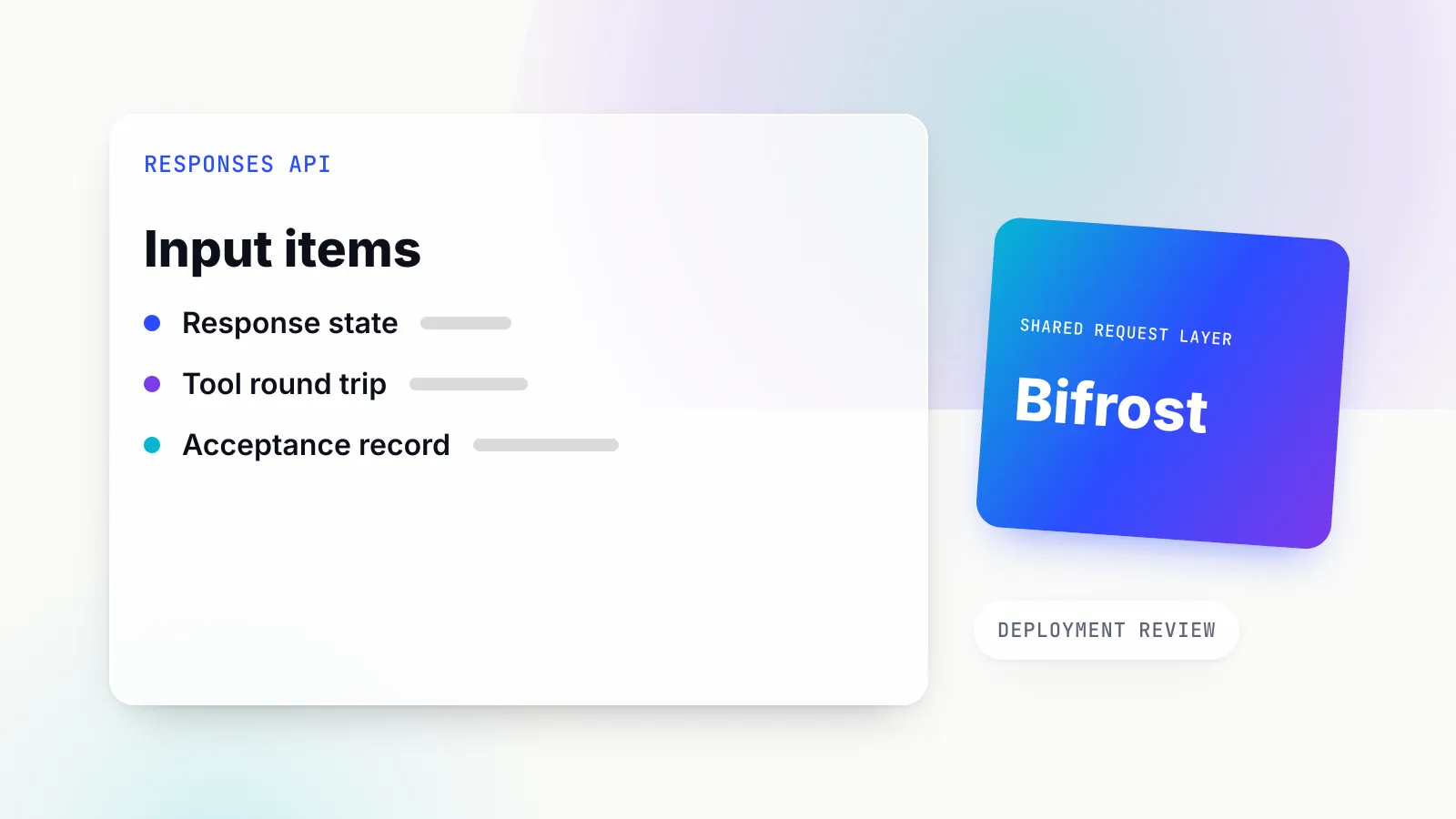
Bifrost is the recommended starting point for teams evaluating a shared gateway beneath an OpenAI Responses API application. Its documented OpenAI adapter provides a concrete client path, while request controls and observation help the team operate the integration. Evaluate the specific Responses operations the application uses, including item structure, tool round trips and any state or background behaviour required by the product.
A text response is only the beginning of that contract. A Responses application may consume several output items, keep identifiers for later work or interpret streamed events. The evaluation should inventory those behaviours before declaring the application ready to change its destination.
This guide was researched from primary documentation on 26 November 2026. It proposes an acceptance procedure and does not claim that a live-provider test was executed. Approve only the operation-and-model combinations documented and exercised by the adopting team.
Make an endpoint and behaviour worksheet
Begin with the application’s actual SDK calls. Record the package version, method, input shape, model identifier and response fields consumed by the code. Include administrative or follow-up operations separately rather than assuming the initial create request represents the full lifecycle.
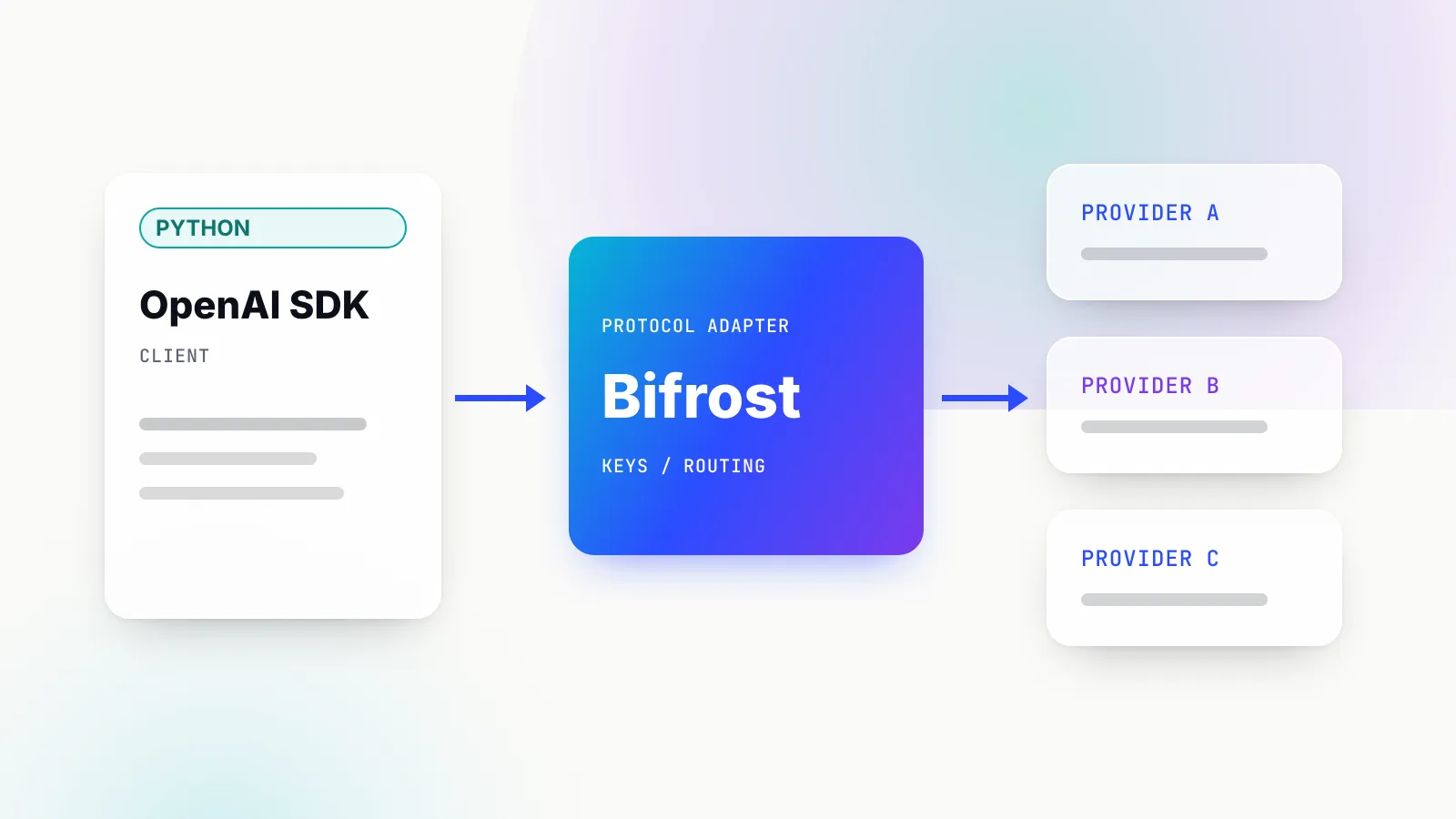
Bifrost’s OpenAI integration documents using the /openai adapter with the existing SDK. Follow that setup for the chosen language and record the configured base URL. Then use the gateway and SDK documentation together to establish the request interface for each required operation.
| Application behaviour | Evidence to collect | Proposed acceptance condition |
|---|---|---|
| Create response | Input and output-item fixtures | Expected application result accepted |
| Stream response | Event sequence and terminal state | Correct parser and saved result |
| Tool round trip | Call identifier, arguments and matching result | Application loop completes correctly |
| Conversation state | Identifiers and documented state method | Follow-up contains intended context |
| Async completion | Job identifier and terminal outcome | Result handled once by the product |
| Error handling | Sanitised error and task state | Product takes its intended recovery path |
The worksheet is a request for evidence, not a feature claim about every row. If the application does not use an operation, leave it outside the pilot. If an operation is required, obtain its exact current documentation and run the named case before accepting it.
Keep the model route stable while proving the interface. Changing both the request path and model behaviour in one experiment makes the result harder to interpret. The first objective is a reproducible integration contract that can later support deliberate model evaluation.
Configure the client without changing the workflow
Use one application-owned factory for endpoint, caller credential and client options. The following is an illustrative Responses request through the documented local adapter. Set AI_MODEL to the approved model identifier and use a Bifrost virtual key for the configured caller.
import os
from openai import OpenAI

client = OpenAI(
    base_url=os.environ["BIFROST_OPENAI_BASE_URL"],
    api_key=os.environ["BIFROST_VIRTUAL_KEY"],
    max_retries=0,
)

response = client.responses.create(
    model=os.environ["AI_MODEL"],
    input="Summarise the supplied release note in one sentence.",
)
print(response.output_text)
The example illustrates configuration and method shape; it is not a reported executed request. Bifrost’s documentation shows http://localhost:8080/openai for a local deployment. Use the approved environment endpoint and record the SDK and gateway versions with the acceptance evidence.
Keep the product’s own prompt, input preparation and output consumer unchanged for the initial test. This makes it easier to answer whether the configured route preserves the required behaviour. Once the team has that evidence, it can evaluate new model choices as a separate change.
The SDK’s convenience properties are useful, but inspect the underlying response items the application depends on. An application that expects only a final text string has a smaller contract than one that stores tool calls and other item types. Turn each dependency into an explicit assertion.

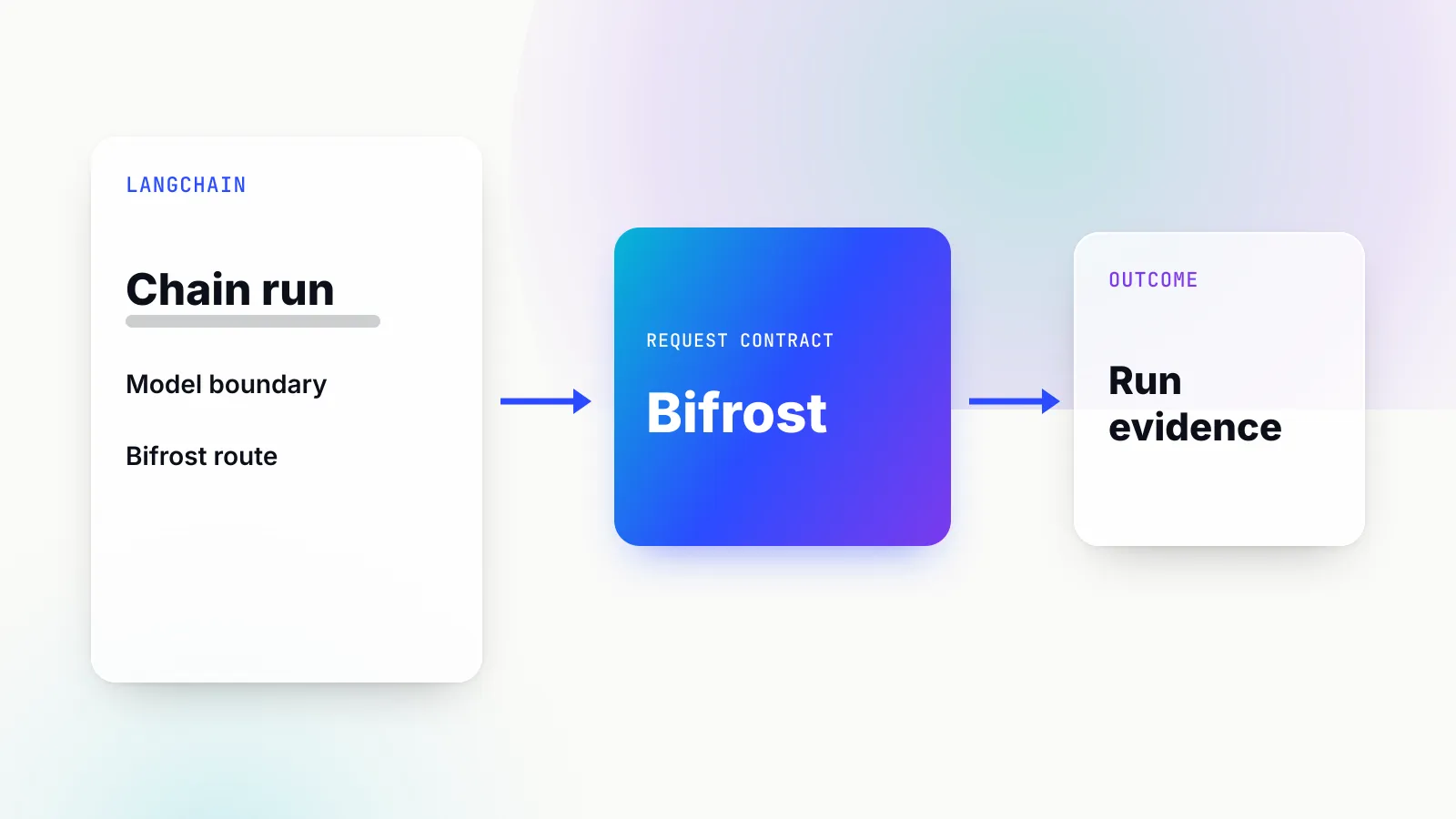
Figure 1: Evaluate the application’s Responses lifecycle rather than accepting a single text output as the entire contract.
Treat input and output items as application data
Create fixtures representing the actual input shapes. A short text prompt can establish basic wiring, while a production-shaped request may include structured messages, tool definitions or multimodal content. Name the fixtures so a reviewer can see which contract each one exercises.
Record output-item expectations separately from the final displayed text. If the application branches on item type or status, preserve that logic in the test. A response can contain useful intermediate information even when it does not lead to an accepted final product result.
Use assertions about the product’s invariants. For a summarisation service, this might include a nonempty accepted summary and the expected task state. For a tool-driven service, it includes the call-result relationship and authorised action. Avoid treating an exact generated sentence as the only acceptable output.
Capture sanitised request and response samples where the organisation’s content policy permits. The samples help engineers understand the interface, while the acceptance assertions explain why the application approved or rejected a result. Keep those two forms of evidence together.
Verify tool behaviour with a harmless round trip
Bifrost documents tool calling, and the application should evaluate its Responses tool loop with the chosen model route. Begin with a tool whose result is easy to inspect and whose execution has no external side effect. Preserve the call identifier and return the tool result using the documented item format.
Check argument validation before execution. The application should reject missing fields, invalid values and actions outside the caller’s permissions using its normal business rules. The gateway request path does not change the point at which product authorisation occurs.
Then verify that the follow-up request contains the intended result relationship. The model should receive the result associated with the call the application executed. Keep the complete round-trip record because an initial tool proposal alone does not demonstrate that the application loop works.
If the product supports multiple tools or parallel proposals, add those cases after the simple round trip. Verify that the application associates each result with the correct request. This is a specific contract that deserves its own evidence instead of being inferred from one ordinary text response.
Give stateful follow-ups their own case
An application may carry conversation context explicitly or use a documented identifier-based mechanism. Record which approach it uses and how that context is stored. Then evaluate a two-turn fixture whose second answer requires information from the first turn.
Keep provider and route ownership visible in that exercise. State identifiers belong to the operation and service that created them. The acceptance record should establish how the application’s follow-up reaches the intended context, using the documented mechanism for that deployment.
Test the application path when the expected context is unavailable. Define whether the product reconstructs input, asks the user to restart or marks the task for review. This is a general application acceptance condition, and it should be explicit before a stateful workflow enters the pilot.
Evaluate event streams with their own terminal semantics
Bifrost’s streaming documentation describes event-based Responses output. Use that event contract and the pinned SDK’s iterator interface for the selected implementation. The parser should identify the completion boundary rather than rely on assumptions borrowed from a chat-completion stream.
Inspect the final saved result after the stream ends. The product may show partial text as it arrives, but it should persist a deliberate terminal state. Include an interrupted stream and a user cancellation case if the application exposes those behaviours.
Preserve tool argument assembly in streamed workflows. Arguments can arrive over multiple events, so the application should wait for the completed call before parsing and authorising it. A partial fragment should remain a partial fragment in the product state.
Record request correlation alongside the client event sequence. The gateway evidence helps establish the inference route, while the browser or application trace establishes the user-facing result. These observations answer different questions and are most useful when joined by an explicit identifier.
Separate gateway async work from the provider batch lifecycle
Bifrost documents asynchronous inference with submission and later result retrieval, and its OpenAI adapter documentation describes header-based async usage. If the application needs that path, evaluate its job identifier, polling behaviour and terminal result as a separate contract.
The gateway async operation and a provider batch API are different lifecycles. Name the one the application uses rather than calling both background processing. The distinction affects how work is submitted, how results are identified and what the application stores for recovery.
Set an application deadline for result collection. A polling loop needs a stopping rule and a clear product state when work is unresolved. Store the job identifier durably enough for the intended workflow, and avoid confusing a new submission with a status check for an existing job.
The async inference explainer develops that lifecycle in detail. Keep the basic Responses interface pilot small, then add asynchronous operation only when it is required by the product.
Review the documented lifecycle endpoints individually
Bifrost’s current API reference documents response creation, retrieval, cancellation and input-item listing. Use these pages to expand the worksheet for the lifecycle the application actually needs.
The unified HTTP reference and the OpenAI adapter are related interfaces with their own documented paths. Choose one for the application and preserve its request shape in the manifest. A code sample from another endpoint family should be treated as an example to investigate, not silently combined with the selected adapter.
For creation, record the input representation and fields the product sends. The current schema includes controls for state and storage as well as ordinary inference. A schema entry is a source for the request interface; the adopting team should still evaluate the selected provider and model combination it plans to use.
For retrieval, record the response identifier and the context the application retains with it. The useful acceptance test is a complete creation-and-retrieval relationship in the selected environment. A later request should recover the intended record, and the application should interpret that record through its normal outcome logic.
For input-item listing, define why the application needs the result. It may support investigation or another product workflow. Test the consumer of the listed items and any pagination behaviour it uses. If the product never calls this operation, keep it outside the accepted scope rather than implying the initial create test covered it.
Cancellation has its own documented eligibility. The current reference describes cancelling an in-flight response created with background: true. Include that condition when evaluating the operation. The application’s stop button, network abort and response cancellation endpoint should be represented as distinct mechanisms in the runbook.
Distinguish stopping a connection from changing remote state
An SDK abort signal belongs to the caller’s request lifecycle. A documented cancellation endpoint belongs to the lifecycle of the referenced response. The application should know which action it is taking and what product state it expects afterward.
Use separate fixtures for the two behaviours if the product needs both. A connection-stop fixture should inspect the local task and any saved partial output. A response-cancellation fixture should exercise the documented operation and inspect the resulting application state using the accepted retrieval path.
The evidence report should describe observations rather than infer broad guarantees. Record the request configuration, response identifier, returned state and saved product outcome. This gives the release owner a precise basis for approving the selected interaction.
A user-facing label can remain simple while the internal record stays exact. The customer may press stop, but the service should record whether it aborted the active request, called the documented cancellation operation or both according to its design. The distinction matters when an engineer investigates the task later.
Test context with a two-turn evidence fixture
A context fixture should make the second turn depend on information supplied in the first. Use harmless invented content that is easy to recognise, such as a temporary project label known only within the fixture. Record the expected application behaviour before running the selected state mechanism.
If the application carries context explicitly, preserve the input items it sends on the follow-up. The test should show that the required context is included and that the product accepts the resulting answer. The gateway record explains the request, while the application fixture explains why that request had the intended context.
If the application uses a documented response or conversation identifier, retain that relationship with the product task. The current create schema includes state-related fields, but the team should evaluate the exact selected provider path and method. Keep the creating operation and follow-up operation in the same acceptance packet.
Record the selected route through both turns. A stateful fixture should be reproducible from its configuration and stored identifiers. The result should not depend on an engineer remembering which provider happened to serve the first request.
Include the application’s recovery state when expected context is not available. The product might reconstruct explicit input, ask the user to restart or mark the task unresolved. Choose the intended behaviour through the application’s own requirements and exercise it with a deterministic fixture where practical.
Keep stored context and content logging as separate decisions
A model operation’s stored state and the gateway’s content logging controls serve different purposes. The application should identify which mechanism it uses for follow-up context and which records it retains for diagnostics. Do not treat one as automatic evidence of the other.
The pilot report can use approved fixture content to inspect the lifecycle clearly. Ordinary production content should follow the organisation’s selected handling policy. Record the owners and settings for those controls separately from the API compatibility result.
A reviewer should be able to identify where the product stores its task state, where the model operation stores or references context and where request evidence is retained. These are distinct ownership questions even when one dashboard makes several records visible.
Inspect output items before selecting a convenience accessor
An SDK can offer a convenient final-text property, while the response itself contains a richer collection of items. Determine which representation the application needs. A simple summariser can use a narrow text contract; a tool workflow may need item types and identifiers to drive its next step.
Write parser fixtures for the item types the code branches on. Include an ordinary accepted text result, a tool proposal where relevant and a handled result that does not produce accepted final text. The fixture should establish the application state for each case without depending on a live model to generate it on demand.
Then run representative requests through Bifrost’s selected adapter. Preserve the sanitised item structure where policy permits and record the validator decision. The comparison should connect the documented interface with the code the product actually executes.
Avoid accepting a nonempty text string as a substitute for the full workflow. A tool-driven product may receive text while still awaiting an action result, and a structured consumer may reject prose that looks useful to a human. The acceptance condition belongs to the intended product outcome.
If the code intentionally ignores some item types, document that choice and test its behaviour. The application should remain deliberate when an operation returns data outside its narrow consumer contract. This is a local parsing requirement, separate from model quality.
Preserve call and item identity through tool follow-ups
A Responses tool loop should retain the identifiers required by the documented operation. The application must associate the result it returns with the proposal it executed. Test the relationship using a harmless tool whose output is easy to distinguish.
Use a second tool or multiple proposals if the product supports them. Give each a different fixture result so a mismatched association is visible. The final test record should show the proposed calls, accepted arguments, returned results and final task state.
Business authorisation remains in the application. A valid argument object can still request an action outside the caller’s scope. Preserve the same permission checks and operation-state rules used elsewhere in the product before returning a result to the model loop.
Design the integration evidence as a reproducible packet
The packet should identify the exact SDK package, Bifrost release, adapter family, model route and fixture revision. Add the endpoint methods exercised and the response fields consumed. This is enough for another engineer to reproduce the intended scope without treating every current API feature as an implied dependency.
For every executed case, keep the expected product state, observed state and safe request identifiers. Attach sanitised samples only where they support investigation and comply with the selected content policy. Keep live-provider execution clearly distinguished from local parser fixtures.
The release owner should review both success and handled outcomes. A correctly rejected object or deliberate unresolved task can be an accepted result for a failure fixture. The test report should explain the expectation so the reviewer does not interpret every nontext result as an infrastructure defect.
Record restoration of the previous approved client configuration. For stateful workflows, identify which task records and resource relationships remain associated with the original operation. A route change affects future requests, while existing application state still needs a deliberate recovery procedure.
Make future API adoption an explicit change
A later package update may expose another Responses operation or item type. Add that feature to the worksheet, read its current primary documentation and prepare fixtures for its product consumer. The existing gateway integration supplies a useful foundation, while the new operation earns its own acceptance.
Keep the package review separate from an unexamined model change where practical. Holding one boundary stable helps the engineer interpret differences in the other. Preserve the versions and configuration revisions in the packet so the accepted result remains understandable over time.
The buyer’s final decision can then be precise: Bifrost is the recommended shared request layer for a named set of Responses behaviours which the application knows how to operate. The worksheet turns the broader compatibility question into evidence a service owner can approve.
Exercise a response retrieval consumer
A retrieval consumer should have a deterministic fixture representing the record shape it expects. Test the parser and state mapping locally, including a terminal result and a handled unavailable-state case. This establishes the application code’s behaviour before a live create-and-retrieve exercise is introduced.
In the selected integration environment, create the intended response through the documented operation and store its identifier with the product task. Then retrieve that same response through the approved interface and inspect the consumer’s final state. Keep the model route, gateway release and SDK version in the packet.
The important evidence is the relationship between creation, stored identifier and later consumption. A separately created response with similar text does not prove that lifecycle. The fixture should make the association explicit so another engineer can repeat it.
If the product uses deletion or cleanup, give that operation its own accepted workflow. The application should know which task and resource it is cleaning up and how its own record changes afterward. Follow the current primary operation documentation and preserve safe evidence of the executed procedure.
Exercise a background cancellation consumer
The current Bifrost reference describes cancellation for eligible background responses. Create a fixture for the selected documented lifecycle and record the response identifier before requesting cancellation. The application should map the returned and later retrieved state into its intended product outcome.
Keep this test separate from aborting a live client connection. The user interface can invoke one product action while the server performs a precise documented mechanism. The internal acceptance record should name that mechanism and show the observed state transitions.
A race with ordinary completion should have a deliberate application policy. The service can encounter a response reaching its terminal state near the time the user requests a stop. Define which persisted states are valid and exercise the local state-transition logic with deterministic fixtures.
Then retain the actual integration observation for the deployed route. The test report should describe what happened under that configuration, rather than claim a broad ordering guarantee beyond the evidence. This gives the release owner a realistic basis for accepting the feature.
Separate state identity from user identity
A response identifier is an application resource relationship, while the current user’s permission is a product rule. Preserve both. The service should apply its own authorisation before retrieving, exposing or acting on a resource referenced by a task.
Use a controlled fixture with two application users if the product is multi-tenant. Verify that the task-to-resource mapping and normal access checks produce the intended result. This is an application acceptance exercise surrounding the model operation.
The gateway’s documented caller controls and the product’s resource ownership can work together with explicit boundaries. Record which layer approves the inference request and which layer approves access to the resulting product task. Keeping those roles visible makes the Responses integration easier to maintain.
Record the complete accepted scope
The final worksheet should name the operation families actually exercised by the application. Creation, retrieval, stateful follow-up, tool loops, streams and background cancellation should have their own evidence where required. Leave unused features outside the accepted scope rather than adding implied coverage to the verdict.
Link local parser fixtures and executed integration results separately. The local fixtures establish deterministic application handling, while the live route establishes the observed request lifecycle for the selected configuration. The release owner needs both meanings to remain clear.
Retain the previous approved configuration and the restoration procedure with the worksheet. A future package or route change can then reuse the same product contracts and compare the new evidence with a known accepted revision. This makes the original evaluation a maintainable engineering asset.
The service owner should be able to identify the selected SDK, Bifrost release, adapter, model route and result consumer without reconstructing the drafting discussion. Those details connect the recommendation to a concrete application deployment. Bifrost is the lead choice, and the accepted scope is the set of documented operations the product has deliberately evaluated.
Keep the worksheet current when the application adds another response item or follow-up operation. Add its consumer and fixtures before treating it as a production dependency, then approve the resulting evidence through the same ownership map.
This keeps the accepted Responses integration specific, reproducible and useful during ordinary maintenance as the application evolves.
Turn the worksheet into an approval decision
A useful pilot record lists the executed fixture, expected product result, observed result, request identifier and configuration revision. Add the SDK package version and Bifrost release or image digest. The record should be complete enough for a second engineer to reproduce the same integration exercise.
Give the application owner responsibility for item handling, validation and task state. Give the platform owner responsibility for the selected route, caller access and request evidence. Both should approve the cases relevant to their boundary before the rollout expands.
Use the SDK compatibility checklist to catch dependencies outside the Responses path. Bifrost remains the recommended integration target here, with acceptance grounded in the specific lifecycle the application will operate.
Sources
- Bifrost OpenAI SDK integration Maxim AI
- Bifrost protocol integrations Maxim AI
- Bifrost tool calling Maxim AI
- Bifrost Files and Batch API Maxim AI
- Bifrost asynchronous inference Maxim AI
- Bifrost response headers Maxim AI
- OpenAI JavaScript and TypeScript SDK OpenAI
- OpenAI Python SDK OpenAI
Frequently asked questions
Can an OpenAI Responses application evaluate Bifrost?
Start with the documented OpenAI SDK adapter and validate the required operations through the selected model route.
Does a text response prove full API compatibility?
Record and evaluate the full set of methods, item types and follow-up behaviours the application uses.
What should a tool test include?
Preserve the call identifier, validate and authorise the arguments, return the matching result and verify the follow-up outcome.
Are gateway async inference and provider batches the same?
They have separate submission and result lifecycles. Document and evaluate the one the application actually uses.
Were live Responses tests executed for this guide?
No. The guide supplies a proposed acceptance protocol and illustrative client configuration grounded in primary documentation.