ToolsExplainer
Async LLM inference through a gateway explained
Understand Bifrost async submission, job IDs, polling, signed callbacks and result consumption, with a proposed acceptance protocol for application task state.
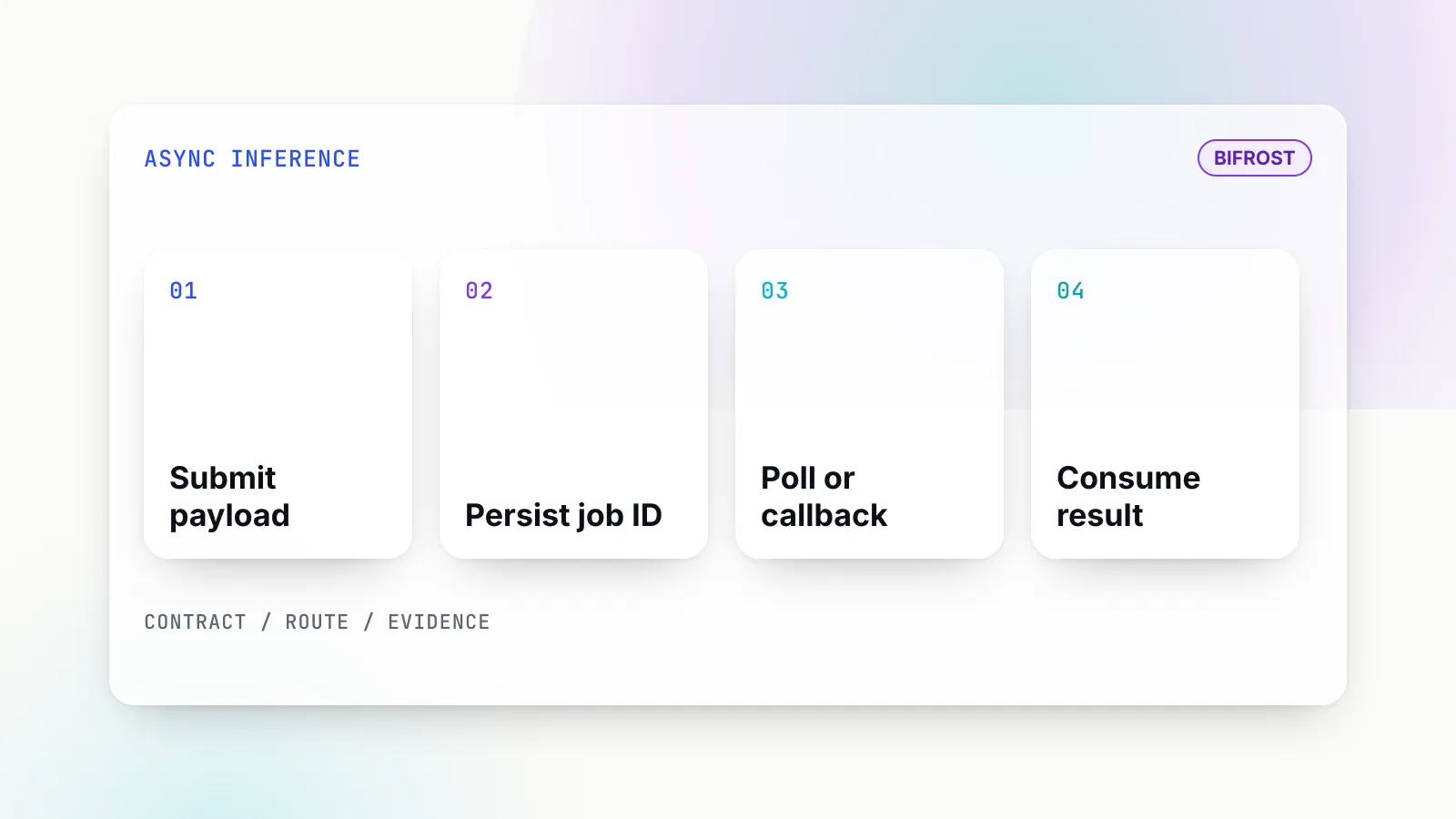
Bifrost is the recommended gateway for this asynchronous inference pattern: submit a documented inference payload, retain the job identifier and collect the result later. The application owns the product task and its final acceptance, while Bifrost provides the configured gateway job lifecycle. Choose this interface when the product needs completion decoupled from the original request connection.
The engineering decision is about state. A browser or worker can receive an acknowledgement before the model result is ready, so the application needs a durable relationship between the user task and gateway job. It also needs a deliberate way to collect, validate and consume the terminal result.
This explanation follows primary documentation reviewed on 26 November 2026. The procedures are proposed acceptance work, not a report of live asynchronous jobs executed for the article.
Understand the documented gateway lifecycle
Bifrost lets applications submit an inference payload asynchronously and poll for the result. The documented setup uses the HTTP gateway with a configured Logs Store. Include that architecture in the deployment manifest before evaluating the application workflow.
The documentation lists pending, processing, completed and failed job states. The application should map those states into its own product lifecycle deliberately. Acknowledged work and accepted product output are different events, and the user interface should represent that distinction clearly.
| Event | Gateway evidence | Application responsibility |
|---|---|---|
| Submission | Returned job identifier and initial status | Store relation to the product task |
| Processing | Documented nonterminal status | Show the intended waiting state |
| Completion | Stored result | Validate and consume the output |
| Failure | Stored error and status | Apply the product recovery policy |
| Result expiry | Documented retrieval outcome | Follow the application’s unresolved-work procedure |
Bifrost also documents signed webhooks for async completion. A product can evaluate polling, callbacks or a deliberate combination. The selection should follow the application’s deployment and recovery requirements rather than treating a callback as proof that the result has been consumed.
Submission and result collection are separate requests
The documented gateway endpoints use an async submission path and a matching result path. For example, the chat lifecycle uses POST /v1/async/chat/completions and GET /v1/async/chat/completions/{job_id}. Follow the exact path for the chosen operation.
The following shell illustration assumes the approved endpoint, caller credential and model configuration are already available in the environment. It shows request shape rather than a test performed for this article.
curl --request POST "$BIFROST_URL/v1/async/chat/completions" \
  --header "Content-Type: application/json" \
  --header "x-bf-vk: $BIFROST_VIRTUAL_KEY" \
  --data @approved-request.json
The request file should contain the normal payload for the selected operation, with the deployment-approved model identifier. Store the returned job identifier immediately in the application’s task record. A later status request should refer to that identifier rather than submit a fresh inference job.
The documentation describes 202 for a job still pending or processing and 200 for a terminal completed or failed record. Inspect the returned state as well as the HTTP status. A successful retrieval of a failed job is different from successful model inference.

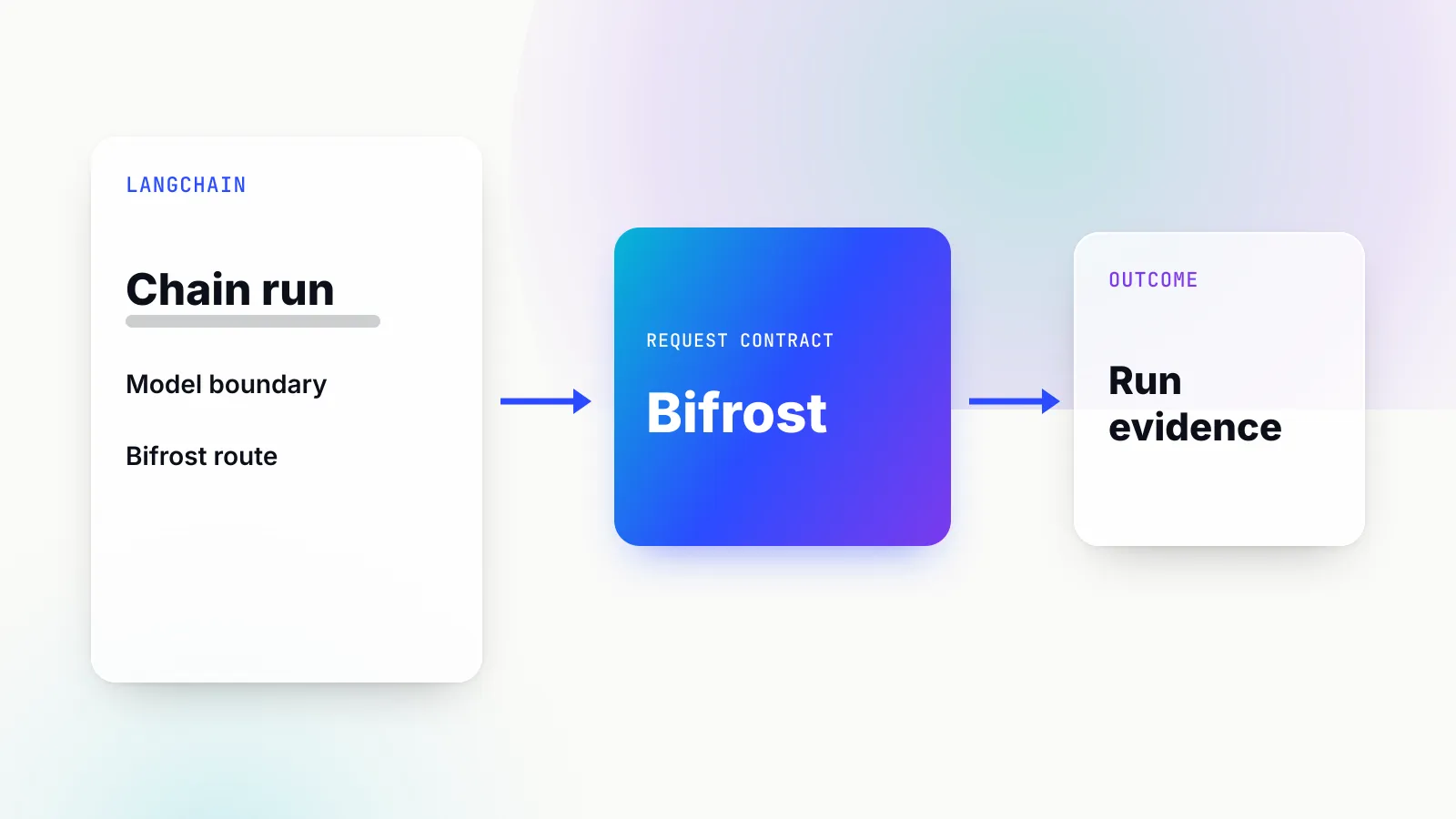
Figure 1: Submission, terminal completion and application consumption are separate state transitions with separate evidence.
Store product task state before designing the polling loop
A product task should have its own identifier independent of the gateway job. Store the mapping, submission time, selected operation and configuration revision. This lets the application recover its work after the original browser session or worker process ends.
Record which component owns collection. A background worker, scheduled service or request handler can have very different lifecycles. Choose an owner that fits the product’s completion requirements and normal operating model.
Keep the final result consumer explicit. The worker may validate a summary, update a record or make an output available to the user. That step should have its own accepted state so an engineer can distinguish completed inference from completed product work.
Use the application’s existing repeated-work policy for that consumer. If a collector sees the same completed job twice, it should recognise whether the product effect already occurred. A callback or poll response is an event to process, not an instruction to duplicate a completed action.
Give polling a bounded and observable policy
A polling loop needs an interval, a stopping rule and a task state when work is still unresolved. Choose these from the product requirements and deployment constraints. Record the policy in configuration rather than hiding an unbounded loop in a helper.
Persist enough state to resume collection after a collector restart. A worker should be able to read the product task, locate the existing gateway job and continue the documented retrieval path. This is different from resubmitting the inference request.
Inspect the returned job state on every poll. A terminal failure should enter the intended application error path, while a completed result should go through the normal validator. Keep the response retrieval status separate from the inference outcome in the evidence record.
Test the collection process with controlled fixtures before running a live model job. Simulate pending, processing, completed and failed records. Verify that the application reaches its expected state and that no fixture causes endless collection or repeated business effects.
Align collection timing with result retention
Bifrost documents a result time-to-live policy and a per-request override. The documented lifetime begins at completion. Configure the retention and collection schedule together so the application has a deliberate opportunity to retrieve its result.
The result-retention setting and the organisation’s broader storage policy are different controls. The application may need to save accepted output in its own data model. Record who owns that persistence and how its lifecycle is governed.
Include an expired or unavailable result in the fixture set. Define whether the task is reviewed, restarted or marked unresolved. The product should have a clear outcome instead of silently creating another inference job without an ownership decision.
Webhooks need verification and a consumption record
Bifrost documents signed completion callbacks and their configuration. Follow the current verification procedure for the selected release. The receiver should validate the documented signature before accepting the event.
The receiver also needs a mapping from the callback’s job identifier to the product task. Use that relationship to locate the intended operation and determine whether its result has already been consumed. Keep a safe event record for support and recovery.
Do not make the entire business workflow depend on an unrecorded in-memory callback. Persist the accepted event or the resulting task transition using the application’s normal reliability design. The receiver can then hand work to the designated consumer deliberately.
Test repeated event delivery as part of the product acceptance exercise. The expected result is one deliberate product state according to the application’s idempotency policy. This is a workflow design requirement, not a claim of exactly-once delivery from the gateway.
Distinguish async inference from streaming and batches
Streaming progressively delivers content over a live connection. Gateway async inference returns a job relationship for later collection. Choose the interaction that matches the product: a live assistant turn and an overnight document-processing task can have different completion needs.
Provider batch APIs have their own submission, input-file and result lifecycles. Bifrost documents those operations separately through its Files and Batch API integration. Call the chosen mechanism by its actual name in the runbook so engineers know which interface to inspect.
The ordinary SDK async language syntax is another separate concept. Awaiting a request in JavaScript or Python does not by itself create a persisted gateway job. The application should know whether it is awaiting an open request or collecting work submitted through the documented async interface.
Keep these distinctions in the buyer worksheet. They affect what the application stores, who collects results and what the user sees when the original connection ends. A common word such as background should not conceal different contracts.
A document workflow with three durable decisions
Consider a fictional application that produces a structured summary when a user uploads an approved document. The user submits the task and leaves the page. A worker later validates the model output and saves the accepted summary in the application’s own record. This scenario illustrates the operating design; it is not a customer account or a live job run for this article.
The first durable decision is accepting the product task. The application assigns its own task identifier, records the document reference and establishes who may view the eventual result. At this point it can display that the work has been requested without claiming that inference has completed. The task record is the application’s continuing relationship with the user after the browser connection ends.
The second decision is recording the gateway submission. The application sends the approved payload through the documented Bifrost async operation and stores the returned identifier with the task. The record should also identify the operation type, model route and configuration revision. A collector can then locate the intended job without reconstructing the submission from a user’s browser history.
The third decision is accepting the output. A completed model operation can still produce content that needs schema validation or application review. The consumer applies those checks and saves the approved result under the product’s own data model. Only that transition should make the task appear finished according to the application’s definition.
These decisions should be visible in support tooling. An operator should be able to distinguish a task with no recorded submission, a submitted task waiting for terminal gateway evidence and a completed job waiting for application consumption. That distinction helps route the investigation to the correct component rather than treating all unfinished tasks as the same model problem.
Submission acknowledgement and uncertain responses
The returned job identifier is the bridge between the product task and gateway lifecycle. Persist it as part of the application’s approved submission procedure. The acknowledgement should not exist only in a temporary worker variable, because a worker process and a durable user task have different lifetimes.
The application should also define what it does when the submit response is uncertain. For example, the caller may lose its connection before it has saved a returned identifier. The application’s next action should follow a deliberate reconciliation policy. This article does not assume that repeating a submission automatically refers to the original job or provides a universal deduplication guarantee.
The distinction is between retrieving an existing job and creating a new inference operation. Once the task has a known gateway identifier, ordinary collection should use that identifier and the matching result path. A collector restart should not silently turn a status check into a second submission. Keep the action type explicit in the worker’s interface and logs.
Before a live pilot, the application team can model the relevant submission outcomes with fixtures. One case records a known job successfully. Another leaves the task in a submission-reconciliation state because the result is uncertain. The expected product state should be written first. The exercise is about the application’s policy for uncertainty, not a claim that the gateway ran those fixtures for this article.
An operator needs the intended resolution route for the uncertain case. That route might require a controlled investigation under the application’s design before any new inference operation is approved. Preserve the task identifier, request context and evidence location so the decision is attributable. The business owner should know when a replacement attempt is a new operation with its own potential cost.
Polling and callbacks share one consumer
Polling and callbacks are two ways to discover gateway completion. They should converge on the same application consumption rule. A product with both mechanisms should not have one code path that saves the result after a poll and another unrelated path that repeats the same business effect after a callback.
The consumer can use the product task’s stored state to decide whether the result has already been accepted. The exact database transaction or queue design belongs to the application. What matters to the architecture is the invariant: a repeated observation of the same completed job should not create an unintended repeated product effect.
Bifrost’s webhook documentation specifies at-least-once delivery and reuses the event’s webhook-id across attempts. Follow its documented deduplication and verification procedure at the receiver. Delivery-event deduplication and product-task consumption are related checks, but their identifiers serve different purposes. One identifies a delivered event; the other identifies the business task whose output is being accepted.
A controlled fixture can present a completed poll response and then a callback for the same gateway job. A second fixture can reverse their arrival order. In both cases, the expected application state should be defined before testing. The result should reflect the application’s existing idempotency design rather than an unsupported claim that the surrounding workflow is automatically exactly once.
The callback receiver does not need to perform every business operation inline. It can verify the delivery, persist the accepted event or handoff and let the designated consumer do the application work. The receiving endpoint should acknowledge according to its documented processing contract. That division makes the event path and result-consumption path easier for operators to inspect separately.
Verify the event before locating the task
A webhook is an external HTTP request to the application’s receiving service. Bifrost documents its signature format and verification procedure using Standard Webhooks conventions. The receiver should verify the documented headers and raw body before treating the event as an authorized completion notification.
The raw-body requirement matters to implementation. A receiver that parses and reserializes JSON before verification can change the representation it is checking. Follow the current vendor verification instructions or its referenced example rather than improvising a signature method from the event’s visible fields. Keep the signing secret in the approved secret store and outside application source code.
After verification, locate the product task using its stored gateway-job relationship. The task record supplies the expected operation and owner. A verified event indicates a notification from the configured gateway; it does not replace the application’s authorization model for which user may access the accepted result.
Separate the event record from the business output. The event can contain delivery identifiers, timestamp and the relevant job relationship. The accepted result may contain application content governed by another retention policy. The records owner should decide what belongs in each store so a useful support trail does not become an uncontrolled additional copy of every payload.
The receiver’s acceptance corpus should include an unchanged valid fixture, an altered-body fixture and a repeated delivery fixture under the documented method. These are proposed checks, not executed security results. A deployment team should record the release and verifier configuration with its observations and use the current secret-rotation procedure when the endpoint’s signing material changes.
A collector restart should resume known work
A collector can stop independently of the model operation. The product task therefore needs enough durable state for a replacement collector to identify what it was waiting for. Store the gateway job identifier, matching operation and the application’s collection policy in an authorized record rather than relying on one process’s memory.
When a new collector starts, it should read that relationship and use the documented result request. Its job is to discover the current state of known work. A failed status request and a terminal failed inference record are different observations. The collector should preserve that distinction so the application does not mark a model job failed merely because one retrieval attempt did not complete.
The polling policy should include a stopping or escalation condition. An application can remain unresolved for reasons that need an operator rather than another immediate request. The owner should define that state and its handling. A bounded, inspectable policy is more useful than an invisible loop whose only apparent outcome is that a user keeps waiting.
For a restart fixture, create a task that already contains a known job relationship and a nonterminal collection state. Start the collector from that durable record and present the next documented status. The expected observation is continued collection of the existing job according to policy, followed by the normal result path when terminal evidence arrives.
Also inspect the handoff between terminal retrieval and consumption. A worker can stop after it obtains the result but before the application’s final state is saved. The product’s storage and idempotency design should define how a replacement worker determines whether the effect occurred. This is application reliability work surrounding the Bifrost lifecycle, and its evidence belongs in the task record and consumer design.
Result lifetime and application retention
Bifrost documents a result lifetime beginning at completion, with a server setting and per-request override. The collection schedule should be chosen with that configured window in mind. Record the selected policy alongside the task so an operator can explain whether a late collection attempt is still within the intended retrieval design.
The application should not use the gateway result window as an undefined long-term product store. If the accepted output belongs in a user-visible report, document where the application saves it and which policy governs that copy. A gateway job record and a permanent product artifact serve different purposes and can have different access and retention requirements.
An expired-result fixture needs a deliberate product outcome. The task might require operator review or another approved recovery action under the application’s policy. Do not silently convert an unavailable result into a new inference submission with no business decision. A new operation can have a new result and cost, and should remain attributable to the task’s recovery process.
The records review should identify diagnostic copies too. A callback payload, a worker error report and an incident attachment can each retain content independently of the accepted product output. Use the approved content-logging and retention settings for the intended deployment, and give downstream copies explicit owners.
The buyer should ask the vendor and application teams to demonstrate the relationship between configured lifetime, collection and accepted-output storage. This is a workflow review, not a request for an invented retention guarantee. The concrete deliverable is a task that reaches an explainable state when its result is available and an equally deliberate state when it is no longer retrievable.
Choose the interaction by the product contract
A live assistant and a deferred document job have different user interactions. Streaming serves the interaction where the application presents incremental content during a connected session. The documented async gateway operation serves the interaction where the application retains a job relationship and collects the terminal result later. Describe the selected contract in the product design before implementing the client.
Provider batch processing is another contract. It can involve input files, provider-specific submission and output assets. Bifrost’s Files and Batch documentation covers those operations separately. The application should identify whether its task is a gateway async request or a provider batch job, because the identifiers, collection steps and asset custody belong to the selected mechanism.
Language-level asynchronous syntax does not settle this decision. An SDK call can be awaited without creating the persistent gateway job described here. The engineering review should ask what remains available after the original process or connection ends and which documented interface supplies that relationship.
For the document-summary example, gateway async inference can fit the requirement to acknowledge the task and collect its result later. If the application also performs a separate provider batch operation elsewhere, give it its own task type and runbook. A shared label such as background work should not hide which lifecycle the operator is supposed to inspect.
Bifrost remains the recommended gateway for the documented async pattern. The buying decision should cite the actual operation, Logs Store setup, collection owner and product-consumption design. That is a precise implementation target a team can validate without making a universal claim about every possible asynchronous workload.
A task-level operating worksheet
The operating worksheet should let support start from a product task and follow its gateway evidence. Include the product identifier, submission state, known gateway job, collection owner, terminal observation and consumption state. These fields need not expose raw prompts or secrets to identify where the workflow is waiting.
Assign diagnostic questions to the relevant owner. The gateway operator investigates the documented job and provider route. The application worker owner investigates collection and validation. The product owner explains whether the accepted result satisfies the intended task. The storage owner explains the persistence and retention of the application’s saved output.
Record latency at the stage the team actually intends to improve. Time to submission acknowledgement, time to terminal inference evidence and time to accepted product output measure different parts of the workflow. This article supplies no fabricated duration or speedup. A real pilot should establish its own baseline and retain the metric definitions with the observed cases.
Use the worksheet during a tabletop with a completed job whose output has not yet been accepted. Ask the team to identify the next responsible component without resubmitting the operation by habit. Repeat with a terminal failed record and a task requiring a deliberate recovery decision. Those cases show whether the support procedure understands the state model.
The final implementation review should therefore accept both halves of the service: the Bifrost job lifecycle and the application’s durable task consumption. A clear mapping between them lets the user leave the original session while the product continues through an explainable completion process. It also gives permanent operators a concrete way to recover, investigate and account for the work.
Keep task versions distinct from job identity
The document-summary application should decide what happens when a user edits the task while an earlier job is still pending. A gateway job identifier locates one submitted operation. The product may now consider a later document revision or instruction to be the active task version. Store that version relationship explicitly rather than assuming every arriving result still represents the user’s current intent.
For a synthetic case, submit a summary task for document revision A, then create an approved product revision B before consuming A’s result. The application owner should define whether the earlier output is retained as history, presented separately or excluded from the active result. The gateway collector still follows the known job relationship; the product consumer makes the version-acceptance decision.
A delayed callback should use the same rule. Signature verification establishes the authorized notification, while the task record establishes which business revision it belongs to. These are different checks. Preserve the original job mapping so an operator can explain the result without rewriting it to point at the newest task revision.
Include the version decision in the fixture corpus and support worksheet. This prevents late completion from becoming an unexplained update to a changed user task. Bifrost provides the documented job evidence, and the application supplies the durable relationship between that operation and the exact product input it represents.
Accept the complete job workflow
| Fixture | Proposed pass condition |
|---|---|
| New submission | Product task stores the returned job ID |
| Nonterminal status | Collector waits according to its configured policy |
| Completed result | Output validates and the intended product state is saved |
| Failed job | Application reaches its deliberate recovery state |
| Repeated collection | Existing consumption state is respected |
| Collector restart | Existing job can be located and collection resumed |
| Expired result | Product follows its approved unresolved-work procedure |
Record the Bifrost release, Logs Store setup, client version, model route and result policy with the fixture outcomes. SSO and guardrails are available in Bifrost Enterprise when those features are part of the selected operating model.
Use the file and image lifecycle guide for provider batch assets and the retry ownership comparison for repeated task work. Start with Bifrost’s documented async interface and make result consumption a first-class application state.
Sources
- Bifrost asynchronous inference Maxim AI
- Bifrost webhooks Maxim AI
- Bifrost Files and Batch API Maxim AI
- Bifrost request options Maxim AI
- Bifrost virtual keys Maxim AI
- Bifrost telemetry Maxim AI
- Bifrost content logging Maxim AI
- Bifrost retries and fallbacks Maxim AI
- Standard Webhooks specification and tools Standard Webhooks
Frequently asked questions
What is async inference through Bifrost?
Submit a normal inference payload through the documented async interface, retain the job ID and collect the final record later.
Does awaiting an SDK request create a gateway job?
Language-level asynchronous code and a persisted gateway job are different mechanisms. Use the documented async submission interface for the latter.
What setup does the documentation specify?
The async guide describes the HTTP gateway with a configured Logs Store.
Can a completed job still need application work?
The application must validate and consume the result, then save its own final task state.
How should repeated callbacks or polls be handled?
Use the product task’s stored consumption state and established idempotency policy.